Armor Up: The Essential Checklist for Technical Enduro Trails
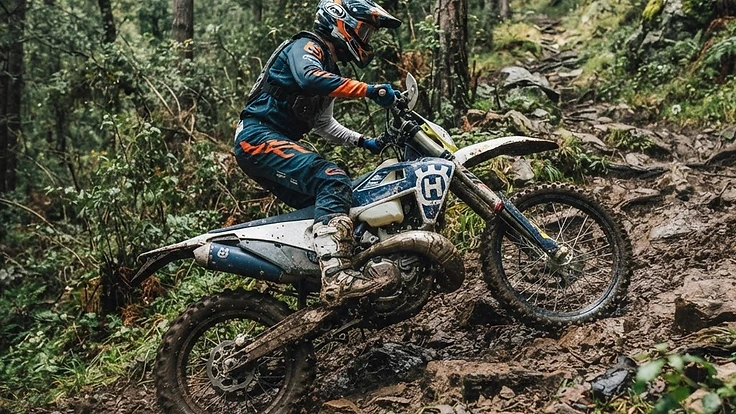
Master technical terrain with a gear setup designed to handle tree impacts and rock gardens without sacrificing your mobility on the bike.
Navigating technical trails and rock gardens requires more than just a capable motorcycle; you also need a comprehensive enduro protective gear checklist to ensure you ride safely and confidently. Off-road riding presents unique hazards that differ completely from street riding or closed-course motocross. From low-speed impacts against trees to high-speed deflections off hidden roots, your equipment must absorb energy, prevent hyperextension, and guard against sharp penetrations. This guide details every necessary piece of protective equipment, explaining how to choose gear that keeps you safe without restricting the mobility required to pilot a motorcycle through difficult terrain.
Head Protection: Helmets Designed for the Woods
The foundation of any safety setup is a high-quality helmet. Enduro riders should look for helmets specifically designed for off-road use, featuring a pronounced chin bar and a wide viewport for goggles. Unlike street helmets, off-road helmets are ventilated to exhaust massive amounts of body heat generated during physical riding.
When evaluating helmets, check for current safety certifications, such as ECE 22.06 or standard DOT approval. Beyond basic foam construction, modern helmets incorporate rotational impact systems. These systems use sliding inner liners to reduce the rotational forces transferred to the brain during a crash, which is especially critical when glancing off rocks or hard-packed dirt. A premium helmet typically costs between approx. $300–800, but this is the single most critical investment you will make.
Weight is another vital factor. A lighter helmet reduces fatigue on the neck muscles over a four- or five-hour ride. Carbon fiber options provide excellent energy dispersion while keeping the physical weight low. Remember to replace your helmet every five years or immediately after a severe impact, as the internal EPS foam compresses and loses its ability to absorb subsequent shocks.
Vision Protection: Goggles and Lenses
Eye protection is mandatory. Goggles shield your eyes from roost, low-hanging branches, dust, and mud. For enduro, standard single-pane motocross goggles often fail because they fog up easily when you are wrestling a bike through slow, technical sections.
Instead, seek out dual-pane lenses, which create a thermal barrier that prevents condensation from forming on the inside of the lens. Vented frames also allow air to circulate around your face. In terms of lens color, clear lenses are standard for dense, dark woods, while tinted or mirrored lenses work well for open desert or cross-country formats where the sun is highly reflective.
Upper Body Armor: Chest Protectors and Pressure Suits
Protecting your vital organs and ribs from handlebar impacts and flying debris is non-negotiable. Upper body armor falls into two main categories: hardshell roost deflectors and soft-armor pressure suits.
Hardshell protectors feature rigid plastic plates over the chest and back. They excel at deflecting sharp objects like branches and rocks kicked up by the rider ahead of you. Many are modular, allowing you to remove shoulder guards based on your preference.
Pressure suits, on the other hand, are mesh jackets with integrated impact foam (such as D3O or EVA foam) positioned at the chest, back, shoulders, and elbows. This foam remains soft and flexible under normal conditions but hardens instantly upon impact to disperse force. Pressure suits offer more comprehensive coverage but can retain more heat, making them less ideal for mid-summer riding in high humidity.
Neck Braces: Preventing Cervical Injuries
While occasionally debated regarding rider comfort, neck braces are engineered to prevent catastrophic hyperextension, hyperflexion, and axial loading injuries. A neck brace sits on the shoulders and creates a hard stop for the helmet, limiting the extreme range of motion during a crash.
Modern neck braces (approx. $250–500) are highly adjustable. To function correctly, they must fit snugly against the chest and back without floating freely. Ensure that the neck brace you select is compatible with your chest protector; many brands design their chest pieces with removable upper panels specifically to accommodate the downward struts of a neck brace.
Joint Protection: Knee Braces vs. Knee Guards
Knee injuries are incredibly common in enduro, primarily due to the necessity of dabbing your feet on uneven terrain to maintain momentum or correct a slide. This action frequently twists the knee, threatening the ACL and meniscus.
Knee guards provide basic impact protection against rocks and the motorcycle itself. They usually consist of a hard plastic cap over foam padding and cost between approx. $50–150. However, they offer zero structural support against twisting.
Full mechanical knee braces (approx. $300–800 per pair) incorporate rigid frames—usually carbon fiber or aluminum—and mechanical hinges that mimic the natural movement of the knee joint. These frames transfer twisting forces away from the delicate ligaments of the knee and into the stronger bones of the upper and lower leg. For serious off-road riding, knee braces are a mandatory part of the protective gear checklist.
Elbow guards follow a similar logic but focus purely on impact. Many riders opt for soft slip-on elbow pads that fit under the jersey, as bulky hardshell elbow guards can sometimes cause arm pump by restricting forearm expansion.
Hand Protection: Gloves and Blister Prevention
Enduro gloves need to offer tactile feedback while protecting against abrasions. Avoid thick, heavily padded gloves on the palms, as they fold up and cause severe blisters during long rides. The palm should be a single layer of durable synthetic material. The top of the hand can feature TPR (Thermoplastic Rubber) patches to protect the knuckles from branches.
Hand protection also involves the motorcycle itself. Full wrap-around aluminum handguards bolted to the handlebars will protect your levers from snapping and your fingers from being crushed against trees.
Lower Body and Footwear: Enduro Boots
Motocross and enduro boots are drastically stiffer than standard street boots. This stiffness is deliberate; the boot acts as a cast, preventing the ankle from rolling or folding if a 100-plus kilogram motorcycle falls on your leg.
When purchasing boots (approx. $250–650), prioritize models with an internal or external mechanical ankle hinge. The hinge allows you to flex your foot up and down to operate the shift lever and rear brake while completely restricting side-to-side movement.
Enduro-specific boots differ from motocross boots primarily in the sole. They feature a lugged, grippy sole (similar to a hiking boot) rather than a smooth sole. This grip is essential when you have to dismount and push your motorcycle up a muddy, deeply rutted incline.
Matching Gear to Your Enduro Machine and Discipline
Your protective needs will scale based on the speed and the motorcycle you are riding. The dynamic forces differ massively depending on engine size and motorcycle weight.
For example, if you are riding a 2-stroke like the Husqvarna TE 300—which weighs 107 kg (without fuel) and features a 293.2 cc engine—your riding is likely focused on slow, highly technical terrain. Hard enduro demands intense physical exertion, meaning your gear priority should lean heavily toward ventilation and maximum mobility, favoring soft-shell impact foam and lightweight helmets. If you are comparing engine types for this exact scenario, reading our breakdown of 300 Two-Stroke or 350 Four-Stroke? The Reality of Technical Enduro provides insight into how the bike dictates rider fatigue.
Conversely, piloting a 4-stroke across open terrain introduces high-speed crash variables. Riding the Honda CRF450RX (previously listed here as Honda CRF 450RX)—with a 449.8 cc engine and carrying 116.1 kg (curb, full tank) of mass (note that these weights use different measures and are not directly comparable)—requires gear designed to withstand high-velocity sliding and blunt force trauma, making hardshell armor and rigid mechanical knee braces absolutely critical.
Protective Gear Comparison Table
Below is a comparison of how your gear focus should shift based on your specific off-road riding discipline:
| Gear Component | Technical Woods / Hard Enduro | High-Speed Cross-Country | Dual-Sport / Trail Riding | | :--- | :--- | :--- | :--- | | Helmet | Lightweight, max ventilation | Aerodynamic, maximum EPS thickness | Comfort-oriented, integrated visor | | Body Armor | Soft impact foam (D3O) | Rigid hardshell with rib protection | Lightweight pressure suit | | Knee Protection | Flexible knee braces | Rigid mechanical knee braces | Standard hard-shell knee guards | | Boots | Enduro lugged sole, high flex | MX smooth sole, maximum stiffness | Adventure sole, moderate flex | | Goggles | Dual-pane vented lenses | Single-pane tear-off compatible | Dual-pane or ADV shield |
Hydration and Trail Survival Gear
While not strictly crash protection, a hydration pack is essential safety gear. Dehydration leads to cognitive decline, which drastically increases your chances of making a critical error and crashing. Most enduro riders wear a hydration backpack carrying 2 to 3 liters of water.
Modern waist belt packs are also gaining popularity because they move the water weight off your shoulders, lowering your center of gravity and reducing back fatigue over long distances. Inside these packs, you should also carry a basic trail survival kit, including a tourniquet, bandages, zip-ties, and an emergency blanket.
By carefully checking off every item on this list, you ensure that you are prepared to handle the physical demands and inevitable crashes associated with off-road riding, allowing you to focus purely on the trail ahead.
Frequently Asked Questions
Do I need to wear a chest protector if I am only riding slow trails?
Yes. Even at slow speeds, a chest protector defends against impalement from branches or handlebars if you wash out the front tire. A simple tip-over can result in broken ribs if the bar end strikes your chest, making torso protection vital regardless of your pace.
How often should I replace my off-road helmet?
You should replace your off-road helmet every five years from the date of manufacture, or immediately after a hard crash where your head strikes the ground. The internal EPS liner is designed to crush only once to absorb impact energy, and sweat and UV exposure break down the materials over time.
What is the difference between motocross boots and enduro boots?
The main difference is the sole. Motocross boots have smooth, flat soles designed to slide along dirt in corners. Enduro boots feature heavily lugged, blocky soles designed to grip rocks and mud when the rider needs to dab their foot or push the motorcycle up a hill.
Are knee braces worth the high cost for a beginner?
Absolutely. The knee joint is incredibly vulnerable in off-road riding, and treating a torn ACL is vastly more expensive and painful than purchasing a set of knee braces. Braces prevent the twisting motions that cause the majority of severe knee injuries on dirt bikes.
Can I wear street motorcycle gear for enduro riding?
No. Street gear is designed primarily for abrasion resistance on asphalt and offers very limited impact protection or ventilation. Off-road riding requires high mobility, massive heat exhaust, and specialized rigid protection against blunt-force impacts and twisting joints.
Keep Reading


Join the Enduro University community
Create a free account to comment on this article, make race predictions, play daily trivia, build your virtual garage, enter the photo contest and climb the leaderboards.
Related Stories



Comments (0)
Be the first to comment.