KTM 350 vs Husqvarna FE 350: Choosing the Right Austrian Mid-Weight

They share a factory, but distinct chassis and suspension setups make these two 349.7 cc machines feel different on technical trails.
Author: Enduro University Desk
The decision between the KTM 350 EXC-F vs Husqvarna FE 350 is one of the most common dilemmas for off-road riders looking for a mid-weight four-stroke. The 349.7 cc displacement has carved out a segment in the off-road market, offering a blend of 250cc-like handling with torque figures that closely trail the 450cc class. While both of these motorcycles share the same Austrian parent company and roll out of the same manufacturing plant in Mattighofen, they are far from identical. They feature distinctly different chassis configurations, subframe materials, ergonomics, and suspension setups that alter how they behave on technical trails.
Understanding these nuances is critical before making a purchase. In this comparison, we will break down the engine, structural differences, suspension dynamics, and maintenance requirements to help you decide which white or orange machine belongs in your garage.
Shared DNA: Engine and Core Chassis
At the heart of both machines lies the exact same power plant. You are looking at a refined, fuel-injected 349.7 cc 4-stroke engine. The power delivery is linear, providing tractable bottom-end grunt that resists stalling in slow-speed rock gardens, yet it loves to be revved out on fast, open fire roads.
The core frame geometry remains practically identical. Both bikes feature a central double-cradle chromoly steel frame, engineered for specific longitudinal and torsional flex parameters. This frame acts as a shock absorber, working in tandem with the suspension to reduce rider fatigue during long days in the saddle. The KTM weighs 107 kg (without fuel, international spec) while the Husqvarna's weight is not verified, so their weights are not directly comparable. They remain agile for four-strokes equipped with headlights, taillights, and emissions equipment.
| Spec | KTM 350 EXC-F 2025 | Husqvarna FE 350 2025 | |---|---|---| | Engine Type | 4-Stroke | 4-Stroke | | Displacement | 349.7 cc | 349.7 cc | | Weight | 107 kg (without fuel, international spec) | weight not verified | | Base MSRP | $12,649 | Not in the 2025 US lineup; the US gets the street-legal FE 350s ($12,749) |
The Suspension Divide: PDS vs Linkage
The main mechanical difference between these two motorcycles is how the rear wheel connects to the frame. This structural choice changes how each bike interacts with the terrain.
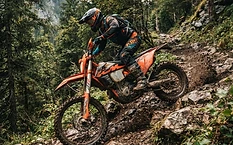
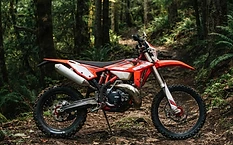
The KTM 350 EXC-F utilizes KTM's proprietary PDS (Progressive Damping System). In this setup, the rear shock mounts directly from the swingarm to the frame, completely eliminating the lower linkage mechanism. The progressive damping is achieved internally within the shock body rather than through a mechanical rising rate. For extreme enduro riders, PDS is often the preferred choice. Without a linkage hanging below the swingarm, the KTM gains ground clearance. When you are pivoting over large logs or dragging the bike across jagged rock ledges, there is no mechanical knuckle to get hung up or damaged. Additionally, PDS shines in deep mud and ruts, as there is less material dragging through the trench.
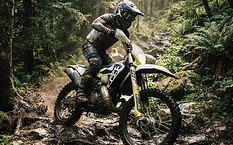
The Husqvarna FE 350, on the other hand, utilizes a traditional linkage rear suspension. The shock connects to a series of mechanical arms that create a rising rate as the wheel moves through its travel. The primary advantage of linkage is a more planted, predictable feel, especially at higher speeds. When hitting successive square-edged bumps, acceleration chop, or high-speed whoops, the linkage system keeps the rear wheel tracking closer to the ground with less deflection. The linkage also naturally lowers the rear of the bike under the rider's weight, resulting in a slightly lower seat height.
If you want to read more about how suspension types react on vertical climbs, check out our guide on how to Master the Physics of Near-Vertical Hard Enduro Hill Climbs.
Subframe Construction and Ergonomics
Beyond the shock absorber, the rear structure of the bikes differs significantly. The KTM 350 EXC-F uses a lightweight, two-piece aluminum and polyamide subframe. It offers a rigid, race-focused feel that translates trail feedback directly to the rider. The ergonomics on the KTM are typically described as aggressive, with a flatter seat profile that encourages the rider to move forward over the tank during cornering.
The Husqvarna FE 350 features a two-piece polyamide composite subframe. This composite material is engineered to offer more flex than the KTM's aluminum setup. When you land off a large drop or slam into a hidden stump, the composite subframe absorbs a fraction of that kinetic energy, delivering a slightly more compliant ride. Furthermore, if you crash hard, the composite subframe will often flex and return to its original shape, whereas an aluminum subframe might permanently bend.
Ergonomically, the Husqvarna feels slightly wider between the knees due to the bodywork design. The handlebars also vary; Husqvarna typically specifies ProTaper bars which have a distinct flex characteristic, while KTM favors Neken bars. The combination of the linkage suspension and the composite subframe makes the Husqvarna generally feel a bit more relaxed and comfortable for long-distance trail riding.
Trail Scenarios: Where Each Bike Excels
To make an informed decision, you must analyze your local terrain.
If your typical Sunday ride involves dragging your motorcycle over wet, mossy logs, navigating near-vertical rock waterfalls, and spending hours in first and second gear, the KTM 350 EXC-F holds an advantage. The PDS suspension allows you to slide over obstacles without a second thought. The rear wheel hooks up predictably at slow speeds, and the lack of linkage means you will never ruin a bearing by smashing it into a granite boulder.
Conversely, if you ride fast, flowing singletrack, desert two-track, or high-speed woods trails with constant acceleration and braking bumps, the Husqvarna FE 350 shines. The linkage suspension will absorb high-speed chatter better than the PDS, reducing rider fatigue and keeping the chassis stable. The slightly lower seat height also benefits riders navigating off-camber root sections where you frequently need to dab a foot to maintain balance.
Many riders upgrading to a 350cc four-stroke are transitioning from a 300cc two-stroke. If you are struggling with this specific jump, our comprehensive comparison on 300 Two-Stroke or 350 Four-Stroke? The Reality of Technical Enduro dives deep into the differences in rotational mass and traction delivery.
Maintenance and Ownership Costs
Both the KTM and Husqvarna feature identical maintenance schedules for the engine. Oil changes, valve clearance checks, and top-end rebuild intervals are exactly the same. Both bikes feature convenient tool-less air filter access, making routine filter swaps a 60-second job.
However, chassis maintenance differs. The Husqvarna's linkage system requires regular servicing. You will need to periodically disassemble the lower shock mount, clean the needle bearings, and repack them with waterproof grease. If you ride in deep mud or water crossings frequently, this becomes a mandatory part of your seasonal maintenance. Failing to grease the linkage will result in seized bearings and a harsh suspension feel.
The KTM's PDS system requires far less routine maintenance. There is a single Heim joint at the top and bottom of the shock. You simply wash the bike, occasionally hit the joints with a mild penetrant or silicone spray, and replace the lower Heim joint when it develops vertical play. It is cheaper, faster, and easier to maintain.
If you decide on the Husqvarna and ride rocky terrain, investing in aftermarket protection is recommended. Expect to spend approx. $150 to $300 on a heavy-duty skid plate that features an extended rear section to guard the vulnerable linkage knuckle against impacts.
Making Your Choice
Choosing between these two motorcycles comes down to personal preference, terrain, and budget. The KTM 350 EXC-F has a US list price of $12,649, while the Husqvarna FE 350 is not in the 2025 US lineup; the US gets the street-legal FE 350s ($12,749).
If you prioritize ground clearance, simplicity, and an aggressive race feel, the orange machine is your answer. If you prefer high-speed stability, a slightly lower seat height, and a more compliant ride quality, the white machine is the tool for the job. Both offer performance that bridges the gap between lightweight agility and four-stroke tractor power.
Frequently Asked Questions
Is the Husqvarna FE 350 just a white KTM 350 EXC-F?
No. While they share the same 349.7 cc engine and main steel frame, the chassis dynamics are very different. The Husqvarna features linkage rear suspension and a composite subframe, whereas the KTM uses a PDS (no-linkage) rear suspension and an aluminum/polyamide subframe.
Which bike has a lower seat height?
The Husqvarna FE 350 generally has a slightly lower effective seat height. This is due to the mechanical geometry of the rear linkage system, which naturally settles slightly lower under the rider's weight compared to the direct-mount PDS system on the KTM.
Do both bikes come street-legal from the factory?
Yes, the EXC-F and FE lines are homologated as street-legal enduros in many markets, coming factory-equipped with headlights, taillights, turn signals, mirrors, and emissions equipment.
Which suspension is better for extreme hard enduro?
Most hard enduro riders prefer the KTM's PDS suspension. By eliminating the linkage hanging below the swingarm, the bike gains vital ground clearance, allowing riders to slide over large logs and sharp rocks without getting stuck or damaging suspension components.
Which bike is cheaper to maintain in the long run?
The KTM 350 EXC-F has a slight edge in routine chassis maintenance costs and labor. The PDS shock only has two main mounting points to service, whereas the Husqvarna's linkage requires regular disassembly, cleaning, and greasing of multiple needle bearings to function correctly.
Keep Reading


Join the Enduro University community
Create a free account to comment on this article, make race predictions, play daily trivia, build your virtual garage, enter the photo contest and climb the leaderboards.
Related Stories



Comments (0)
Be the first to comment.