The Anatomy of Enduro Ergonomics: Tailoring the 2025 Fleet for Technical Dominance
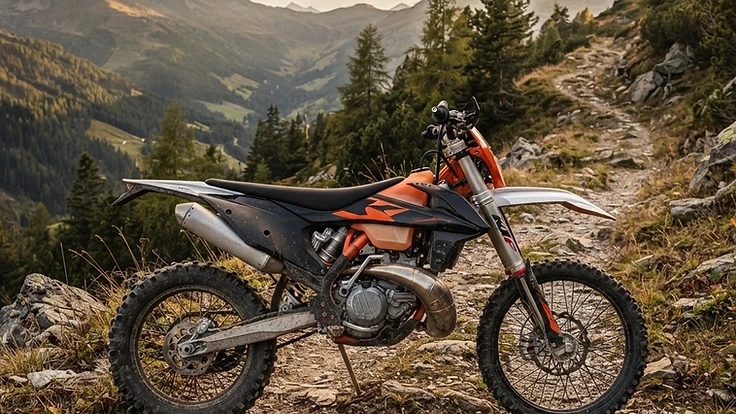
Achieving maximum control in technical enduro requires a precise understanding of the rider-machine interface across platforms like the KTM 300 EXC and Beta 300 RR X-Pro.
The difference between a comfortable rider and a fast rider in the world of extreme enduro is often measured in the millimeters of handlebar sweep, lever angle, and footpeg placement. As we look at the 2025 lineup, the baseline ergonomics provided by manufacturers have never been better, yet the demands of hard enduro require a level of customization that goes beyond the showroom floor. Whether you are navigating a boulder field or a steep mountain switchback, how your body interacts with the machine determines your fatigue rate and your ability to react to sudden changes in terrain. Modern enduro motorcycles, such as the KTM 300 EXC (previously listed here as KTM 300 EXC TPI) with its 104.6 kg (without fuel) weight, are designed with a neutral stance, but the geometry of a rider who stands 185cm tall is vastly different from one who is 170cm. The ergonomics of control begin at the feet and move upward through the contact points of the knees and hands.
Footpeg placement is the foundation of balance. On a bike like the Beta 300 RR X-Pro, which tips the scales at 103.5 kg (dry), the relationship between the pegs and the center of gravity is critical for low-speed maneuvers. Many professional riders opt for slightly lower and rearward-set pegs to provide more leverage during vertical climbs. This adjustment allows the rider to keep the front end planted while maintaining traction at the rear. Furthermore, the width of the pegs on models like the Husqvarna TE 300 provides a broader platform for weight distribution, which is essential when trying to balance a 107 kg (without fuel) machine on a narrow single-track trail. When you are standing for hours at a time, the pressure on your arches can lead to premature fatigue, making the choice of peg platform one of the most significant ergonomic upgrades available.
Moving up the machine, the cockpit configuration is where the most fine-tuning occurs. The handlebar position on the 2025 KTM 450 EXC-F, a four-stroke, must be adjusted to account for the bike's 107.4 kg (without fuel) mass and the torque it generates. A handlebar that is too far forward can make the steering feel twitchy at high speeds, while bars that are rotated too far back can cramp the rider's cockpit, making it difficult to shift weight over the front wheel during turns. The use of adjustable bar mounts, standard on many Austrian models, allows for several millimeters of fore and aft movement. This subtle change can significantly alter the handling characteristics of the 449.9 cc engine, especially when trying to navigate tight woods where precision is paramount. Lever positioning is another crucial element. For riders on the Sherco 300 SEF Factory, power delivery is managed through a hydraulic clutch that requires only a single finger for operation. Setting the levers at a downward angle of roughly 15 to 20 degrees ensures that the wrists remain in a neutral position while standing, reducing the risk of arm pump during a four-hour race.
What it means for the modern enduro enthusiast is that the 'stock' setting is merely a starting point. By understanding the specific measurements and weights of your machine, such as the 116.1 kg (curb, full tank) of a Honda CRF450RX or the 100.2 kg (without fuel) of a Husqvarna TE 150, you can begin to tailor the ergonomics to your specific height and riding style. Proper ergonomics allow you to use your legs more effectively, saving your arm strength for the moments when you truly need to manhandle the bike. As the sport of hard enduro continues to evolve toward more technical and physically demanding courses, the riders who prioritize their ergonomic interface will find themselves with more energy and better control when the terrain turns truly vertical. Total mastery of the machine is impossible without first achieving harmony in the cockpit.
Source: Enduro University Desk
Keep Reading


Join the Enduro University community
Create a free account to comment on this article, make race predictions, play daily trivia, build your virtual garage, enter the photo contest and climb the leaderboards.
Related Stories



Comments (0)
Be the first to comment.