Rieju MR 300 Racing: The Enduro Weapon Challenging the Giants
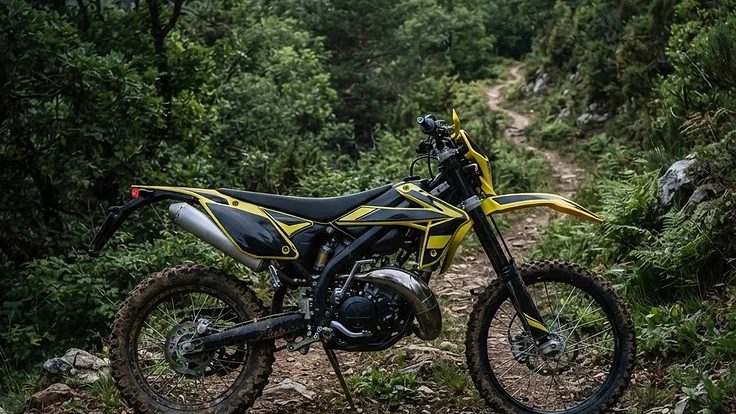
This Spanish-made 299.3cc two-stroke delivers smooth power and traction for riders who want European performance.
As the cost of premium hard enduro motorcycles continues to climb, the Rieju MR 300 Racing (previously listed here as Rieju MRT 300) has emerged as a serious contender for riders seeking European performance. In the world of technical rock crawls, vertical climbs, and relentless obstacles, the 300cc two-stroke remains the gold standard for power delivery and weight management. Rieju, with its deep roots in Spanish off-road manufacturing, has utilized a proven engine and chassis platform to deliver a bike that focuses on the core essentials of enduro. The MR 300 Racing features a 299.3cc two-stroke engine that delivers smooth, linear power, highlighting the bike's design philosophy of traction and rideability. Compared to competitors like the Beta 300 RR Race (previously listed here as Beta RR 300 Racing), the Rieju's delivery is tailored for the privateer who needs the bike to work with them, not against them, in the most grueling sections of a race.
The standout feature of the 2025 Rieju MR 300 Racing is its weight, tipping the scales at 105 kg (dry). For reference, the Husqvarna TE 300 weighs 107 kg (without fuel), the Beta 300 RR Race weighs 103.5 kg (dry), and the GasGas EC 300 weighs 107.6 kg (without fuel). Because these weights use different measures, they are not directly comparable. The lightness is felt immediately in tight switchbacks and when the rider is forced to manhandle the bike over logs or out of deep ruts. Regarding price, the Husqvarna TE 300 lists at $11699 and the Beta 300 RR Race lists at $10699, while the Rieju is sold in the US, but the 2025 list price is not confirmed.
Technically, the MR 300 Racing relies on a mechanical simplicity that many hard enduro purists prefer. By avoiding overly complex electronic rider aids, the bike offers a direct connection between the throttle and the rear wheel. The 299.3cc engine's power is delivered in a tractor-like fashion, allowing the bike to chug at extremely low RPMs without stalling, a critical trait for navigating boulder fields. The chassis geometry is designed for stability, yet the low weight ensures it remains flickable in technical terrain. For the rider, this means less time fighting the bike's momentum and more time focusing on line choice. The suspension components are tuned for a plush initial stroke, which is essential for absorbing the small, repetitive impacts found in technical woods riding, though aggressive racers may choose to stiffen the settings for higher-speed cross-country sections.
What it means for the enduro community is that the Rieju MR 300 Racing represents a shift toward mechanical simplicity. The 105 kg (dry) weight is a notable feature for technical riding. While the MR 300 Racing may lack the marketing of its Austrian rivals, its performance in technical terrain is undeniable. For the rider who values mechanical reliability, lightweight handling, and a manageable power curve, the Rieju offers a compelling alternative to the traditional market leaders. It proves that in the world of hard enduro, precision and weight management are often highly valuable.
Keep Reading


Join the Enduro University community
Create a free account to comment on this article, make race predictions, play daily trivia, build your virtual garage, enter the photo contest and climb the leaderboards.
Related Stories



Comments (0)
Be the first to comment.