Momentum Over Muscle: Mastering Hard Enduro on the 2025 GASGAS EC 250 and Husqvarna TE 150

Small-bore two-strokes force riders to develop flawless clutch control and line selection, making them the ultimate tools for mastering technical hard enduro terrain.
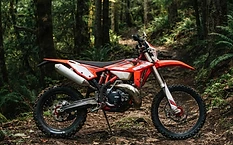
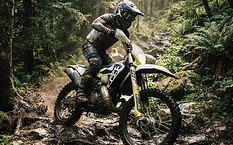
Hard enduro tracks are becoming increasingly technical, forcing riders to reevaluate their machinery and their fundamental approach to riding. While the 300cc two-stroke remains the default choice for many competitors, relying on massive torque can often mask fundamental flaws in a rider's technique. Enter the small-bore two-stroke. Machines like the 2025 GASGAS EC 250 (previously listed here as GasGas EC 200) and the 2025 Husqvarna TE 150 are experiencing a massive surge in popularity among serious enduro practitioners. These motorcycles demand absolute precision. They punish laziness and reward total commitment. For riders looking to elevate their hard enduro skills, stepping down in displacement is often the most effective training method available, forcing a reliance on momentum rather than brute force. Analyzing the 2025 Husqvarna TE 150 reveals a machine built for pure agility. Positioned competitively in the market with a US list price of $10249, it boasts a remarkably light weight of 100.2 kg (without fuel). This makes it incredibly light, allowing riders to manhandle the bike through rock gardens and over vertical steps with minimal physical exertion. However, the 144 cc engine produces modest peak power. This characteristically light power output means you cannot simply twist the throttle and expect the motorcycle to tractor up a steep, loose incline. You must carry momentum into the base of the climb. You must read the terrain far ahead, anticipating obstacles before they arrive. The clutch becomes your primary throttle, requiring constant, minute adjustments to keep the engine in the optimal powerband without breaking rear-wheel traction. Conversely, the 2025 GASGAS EC 250 offers a slightly different philosophy while maintaining the small-bore ethos. Maintaining a light overall mass of 107.6 kg (without fuel), it provides a middle ground between the ultra-light 150cc class and the traditional 300cc machines. The 249 cc engine delivers a notable increase in power over the Husqvarna, providing a crucial safety net for when momentum is lost on a difficult section. Yet, it still lacks the overwhelming low-end grunt of a 300cc engine. Its US list price of $10499 makes it a highly attractive option, offering a significant power advantage over the 150cc for a marginal weight penalty. Understanding the physics of these machines is crucial for maximizing their potential. Rotational mass is the hidden enemy in technical riding. The smaller internal engine components generate significantly less gyroscopic force than their larger counterparts. This lack of rotational inertia allows the motorcycle to change direction with a mere thought. When navigating a tight, off-camber root section or pivoting around a tree on a steep slope, the reduced gyroscopic effect reduces rider fatigue exponentially. The bike does not fight the rider's inputs; it complies instantly. This characteristic alone makes small-bore two-strokes devastatingly effective in the tightest woods. Technique must adapt to suit these machines. Clutch slip is paramount. On a larger displacement motorcycle, a rider can often dump the clutch at low RPM and let the engine's torque pull them through. Attempting this on the TE 150 will result in an immediate stall. Riders must learn to slip the clutch precisely, keeping the engine revving in the meat of its powerband while modulating the power delivered to the rear wheel. This micro-management of traction translates directly to better riding on any motorcycle. Furthermore, line selection becomes a critical survival skill. Without excess power to blast over obstacles, small-bore riders must find the path of least resistance. They learn to use the terrain to their advantage, pre-loading the suspension to bounce over logs rather than plowing through them, and utilizing banks and berms to maintain corner speed. The trend toward smaller displacement highlights a maturation in the sport of hard enduro. Riders are recognizing that outright speed and peak horsepower are secondary to efficiency, control, and energy conservation. Mastering the 2025 GASGAS EC 250 or the 2025 Husqvarna TE 150 builds a foundation of skills that makes riding any other motorcycle significantly easier. By stripping away the crutch of massive torque, these machines expose a rider's weaknesses and force them to become smoother, smarter, and ultimately faster through the most challenging terrain on earth. The investment in a small-bore two-stroke is not just an investment in a motorcycle; it is an investment in rider development.
Keep Reading


Join the Enduro University community
Create a free account to comment on this article, make race predictions, play daily trivia, build your virtual garage, enter the photo contest and climb the leaderboards.
Related Stories




Comments (0)
Be the first to comment.