Why the 250cc Four-Stroke Is Dominating Modern Woods Racing Again
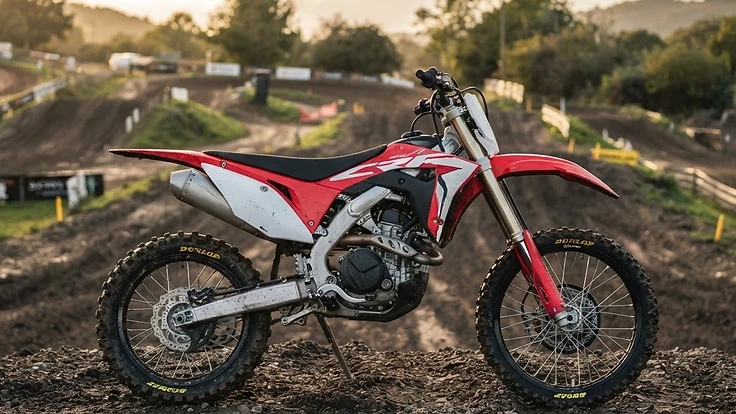
Learn why top enduro riders are trading absolute peak numbers for the traction and momentum that only a quarter-liter four-stroke can provide in tight terrain.
Small-bore four-strokes are experiencing a massive resurgence among amateur and professional woods racers alike across the global enduro community. In an era often obsessed with peak numbers and massive displacement figures, the quarter-liter class proves that usable traction and manageable power delivery frequently result in faster sprint times. Riders are discovering that maximizing momentum through tight trees is far more efficient than wrestling a high-powered machine that constantly wants to break traction. For years, the 250cc four-stroke was viewed primarily as a stepping stone for junior riders transitioning out of the youth ranks before eventually moving up to a 450cc premier class machine. The early iterations of these engines often lacked the bottom-end torque required for serious off-road work, requiring riders to keep the engine screaming near the rev limiter to generate meaningful forward drive. This high-rpm riding style was exhausting in tight woods and often led to premature clutch wear. However, the landscape has shifted dramatically. Modern engine development, advanced fuel injection mapping, and optimized exhaust systems have transformed the 250F into a highly capable, luggable weapon that can hold its own against much larger displacement motorcycles in technical terrain. To illustrate this evolution, we can examine the 2025 Honda CRF250RX (previously listed here as Honda CRF 250RX), a machine purpose-built for closed-course off-road competition. According to the current catalog specifications, this motorcycle features a 249.4 cc four-stroke engine. It carries a weight of 109.8 kg (curb, full tank) and is listed at $8699 in the US. These numbers tell a compelling story about the current state of quarter-liter engineering. The true advantage of the four-stroke lies in its dynamic handling characteristics. While a weight of 109.8 kg (curb, full tank) is slightly heavier than some two-stroke competitors, the way the motorcycle carries that weight is crucial. The smaller internal engine components, specifically the lighter piston, crankshaft, and camshafts compared to a 350cc or 450cc machine, result in significantly less gyroscopic mass. This reduction in rotating inertia means the motorcycle is incredibly eager to change direction. When navigating a dense forest section with back-to-back tight corners, the 250F can be flicked from side to side with minimal physical effort from the rider. It dives into ruts with precision and holds its line without the tendency to push wide under acceleration. Furthermore, the power delivery of a modern 250 class four-stroke is inherently designed to find traction. The power of the Honda CRF250RX is delivered in a smooth, linear curve that allows the rear tire to hook up in conditions where larger engines would simply spin. In slick mud, off-camber roots, or loose rocky climbs, the ability to roll on the throttle and feel the rear wheel driving forward rather than breaking loose is a massive advantage. This predictable traction builds rider confidence, allowing them to carry more corner speed and brake later into turns. The engine braking is also less severe than on a 450cc machine, which helps maintain a flowing rhythm through undulating terrain without unsettling the chassis. Fatigue management is another critical factor where the quarter-liter class shines. Racing a three-hour cross-country event or a grueling multi-day enduro takes a massive physical toll on the human body. A motorcycle that constantly tries to rip the handlebars out of your hands will drain your energy reserves rapidly. The manageable power of the 250F allows the rider to stay relaxed, maintain proper body positioning, and focus on line selection rather than simply holding on for survival. Over the course of a long race, the rider on the smaller machine will often post faster lap times in the final hour simply because they have conserved more energy than their competitors on larger bikes. Setup and preparation for a four-stroke in woods racing require a specific approach. Because you are working with less absolute torque than a larger displacement machine, gearing selection is critical. Many riders opt to add a tooth or two to the rear sprocket to tighten up the gear ratios, ensuring the engine stays in the meat of the powerband during slow-speed technical maneuvers. Suspension setup also plays a vital role. The lighter feeling of the chassis allows for slightly softer valving, which helps absorb trail trash and square-edged bumps, further reducing rider fatigue and keeping the chassis settled. The resurgence of the small displacement four-stroke in modern enduro is a clear indicator that outright power is not the ultimate metric for off-road success. The 2025 Honda CRF250RX demonstrates that a well-engineered 249.4 cc engine, housed in a nimble 109.8 kg (curb, full tank) chassis, offers a potent combination of agility, traction, and rideability. For the vast majority of amateur racers and even many professionals competing in tight, technical environments, the quarter-liter four-stroke provides the perfect platform to maximize momentum, minimize fatigue, and ultimately achieve better results on the trail. It is a precision instrument designed for riders who understand that smooth is fast.
Keep Reading


Join the Enduro University community
Create a free account to comment on this article, make race predictions, play daily trivia, build your virtual garage, enter the photo contest and climb the leaderboards.
Related Stories




Comments (0)
Be the first to comment.