Mastering the Technical Pivot Turn: The Ultimate Hard Enduro Lifeline
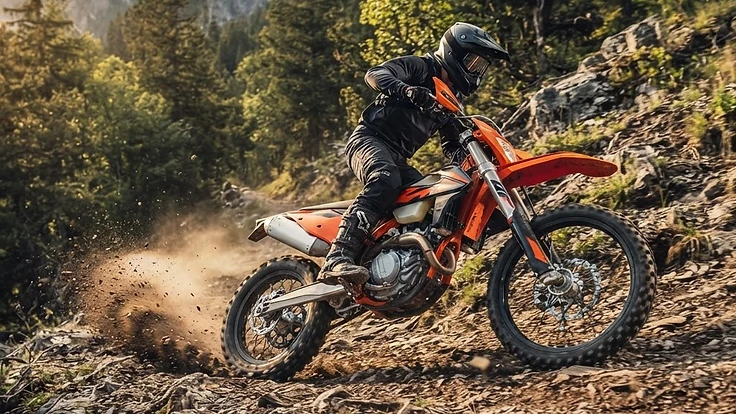
Learning how to effectively pivot turn your enduro motorcycle is the key to conquering tight switchbacks and near-vertical trail obstacles without losing critical momentum.
When the trail disappears into a vertical rock face or a switchback tighter than the wheelbase of your motorcycle, standard steering simply stops working. This is the exact moment where the pivot turn transitions from a flashy trick to an absolute necessity for survival. Mastering this maneuver is essential for anyone looking to progress into serious technical enduro riding. The pivot turn is a fundamental hard enduro technique that allows a rider to change the direction of the motorcycle in an incredibly confined space. Unlike a traditional turn where the front wheel guides the bike along an arc, the pivot turn involves planting the rear wheel, unweighting or completely lifting the front wheel off the ground, and rotating the entire machine around the axis of the rear tire. It is a dynamic movement that requires a precise synchronization of clutch control, throttle application, suspension compression, and aggressive body positioning. Whether you are navigating a washed-out ravine or trying to redirect your line on a near-vertical hillside, the ability to pivot the bike can mean the difference between conquering the obstacle and tumbling back down to the bottom. Executing a perfect pivot turn begins long before the front wheel leaves the ground. The approach requires coming to a near or complete stop, establishing a solid footprint on the ground with your inside leg. Your outside foot remains firmly planted on the footpeg to maintain control of the rear brake and to press down, adding weight to the rear tire. The actual lift is initiated by compressing the front suspension. As the forks rebound, you simultaneously release the clutch to the friction zone and apply a sharp, controlled blip of the throttle. This action uses the engine's torque to lift the front wheel. Bikes with instantaneous low-end power, such as the two-stroke KTM 300 EXC (previously listed here as KTM 300 EXC TPI) or the GasGas EC 300, excel in these moments because their power delivery is immediate and predictable. Once the front wheel is elevated, the turning motion is generated by your hips and shoulders. You actively throw your body weight in the desired direction of travel, pivoting the motorcycle underneath you. Your planted foot acts as an anchor and a pivot point. The rear brake is your absolute safety net during this phase. If you apply too much throttle and the bike begins to loop out backward, an immediate tap of the rear brake will bring the front end crashing back down to safety. Conversely, if you pull the clutch in too abruptly without using the brake, the bike may simply fall over sideways. The coordination between the throttle hand and the clutch finger must be perfectly dialed to maintain the lift just long enough to complete the rotation. Landing the pivot turn smoothly sets you up for the next section of the trail. As the front wheel comes down, you should already be looking ahead at your new line. Your weight should transition forward to keep the front tire planted as you accelerate away. A common mistake among beginners is looking down at the front fender during the maneuver. Target fixation will invariably cause you to lose your balance. Keep your eyes up and focused on where you want to go. Another frequent error is holding your arms too stiffly, which prevents the bike from rotating freely underneath you. You must remain loose and allow the machine to pivot while your core remains stabilized. Before attempting a pivot turn on a sheer cliff face or a treacherous switchback, it is highly recommended to practice the fundamentals on flat, forgiving ground. Set up a simple cone or a soft marker in an open field and attempt to rotate the bike exactly ninety degrees. Start with small, controlled lifts rather than trying to balance at the balance point immediately. Pay close attention to how the motorcycle reacts to micro-adjustments in clutch release. You will quickly realize that the clutch is the true conductor of this symphony, dictating the height of the lift and the speed of the rotation far more than the throttle itself. Additionally, pay attention to tire pressure. A lower rear tire pressure allows the carcass to flatten out, providing a larger contact patch that grips the earth securely while the rest of the bike swings through the air. As you gain confidence on flat ground, gradually move to slight inclines, practicing pivoting both uphill and downhill, as each direction requires a slightly different weight bias. What mastering this technique means for your overall riding progression cannot be overstated. Learning the pivot turn does more than just help you navigate around tight corners; it fundamentally rewires your understanding of motorcycle balance, traction, and energy conservation. Instead of wrestling a heavy machine back and forth in a clumsy three-point turn on a steep hillside, you expend a single burst of controlled energy. This drastically reduces physical fatigue, saving your stamina for the later stages of a demanding race or trail ride. Furthermore, the supreme clutch and throttle control developed while practicing pivot turns will naturally translate into better performance across all other aspects of enduro riding, from rock gardens to slick root sections. Dedicate the time to practice this in a controlled environment, and you will unlock an entirely new level of capability on the trail.
Keep Reading


Join the Enduro University community
Create a free account to comment on this article, make race predictions, play daily trivia, build your virtual garage, enter the photo contest and climb the leaderboards.
Related Stories




Comments (0)
Be the first to comment.