Mastering the Clutch: Slipping, Feathering and Control
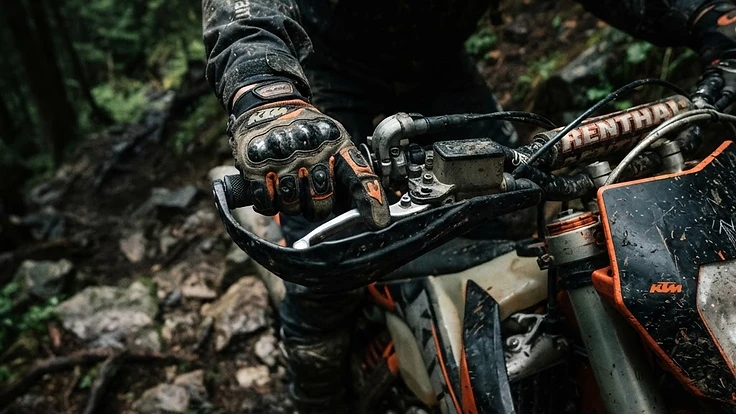
An in-depth guide for enduro riders on how to effectively use and control their clutch for improved performance and confidence on technical terrain.
Mastering the Clutch: Slipping, Feathering and Control
Your clutch is your most powerful tool for controlling your enduro machine on challenging terrain. Learning to master it isn't just about preventing stalls; it's about unlocking precise control, maintaining momentum, and building confidence when the going gets tough.
Understanding Clutch Engagement
Think of your clutch lever not as an on/off switch, but as a variable throttle. The clutch connects the engine's power to the rear wheel. When fully engaged, it's a direct link. When fully disengaged, the engine spins freely. The magic happens in between – the 'friction zone'. This is where you can precisely meter power to the rear wheel, allowing it to spin at a controlled speed even when the engine is revving higher. Finding this zone is the first and most crucial step.
Finding the Friction Zone
On flat ground, with the engine running and in first gear, slowly release the clutch lever. Pay close attention to the exact point where the bike begins to move forward. This is your friction zone. You’ll feel a slight engagement, a subtle pull. Don't just find it; get a feel for its width. How much travel does the lever have within this zone before it's fully engaged?
Practice:
- Start the bike in first gear.
- Hold the clutch lever fully in.
- Slowly release the lever until you feel the bike just begin to creep forward.
- Hold it at that exact point. Notice the engine sound and the feel through the handlebars.
- Gently roll on the throttle slightly. Observe how the rear wheel speed increases. Feather the throttle and clutch together to maintain a slow, steady forward motion without stalling.
- Release the throttle and pull the clutch in fully to stop.
- Repeat this process until you can consistently find and hold the bike at the biting point.
Clutch Control Techniques
1. Feathering: Feathering is about holding the clutch lever in the friction zone, using a combination of light throttle and clutch modulation to control wheel speed. This is essential for slow-speed technical sections, rocky climbs, and navigating obstacles where you need the bike to move forward but can’t afford wheelspin.
How to practice feathering:
- Find a gentle uphill section or a flat, grippy area.
- Get the bike moving slowly using the friction zone as described above.
- Apply a small amount of throttle. As the engine revs, you’ll need to slightly release the clutch lever to keep the bike moving at the same speed, or slightly faster. If the engine bogs, you’re not feeding enough throttle for the clutch position, or you need to release the clutch more. If the wheel spins, you’re giving too much throttle for the clutch position, or you’re releasing the clutch too much.
- The goal is to find a balance where the engine is making power, but the clutch is preventing excessive wheelspin. You're essentially 'slipping' the clutch deliberately to manage power delivery.
- Practice this at walking pace, then gradually increase speed. Try to maintain a constant, slow speed.
2. Slipping for Traction and Obstacles: Slipping is a more aggressive application of feathering, where you intentionally allow the clutch to slip to either break traction (e.g., to get the rear wheel to spin over a log or root) or to control a descent. It also helps absorb engine power surges.
How to practice slipping:
- Over an Obstacle: Approach a small log or root. As you reach it, apply throttle and simultaneously slip the clutch to allow the rear wheel to spin just enough to lift over the obstacle. You’re not just dumping the clutch; it's a controlled slip. This requires feeling the engine power and letting the clutch absorb and transfer just enough to spin the wheel without over-revving.
- Downhill Control: On steep descents, especially loose ones, you can use the clutch to control your speed. Instead of relying solely on brakes, pull the clutch in slightly to disengage engine braking, then slip it to control the rate at which the rear wheel spins. This prevents the rear wheel from locking up and sliding uncontrollably.
- Momentum Building: In deep sand or mud, slipping the clutch can help you build revs without digging in too deep. You use the clutch to keep the engine in its powerband while the rear wheel spins at a controlled rate, allowing you to skim over the surface.
3. Clutch Dumping (Use Sparingly): This is when you abruptly release the clutch lever while giving full throttle. It's rarely the best technique for hard enduro but can be useful for very short, explosive bursts of traction, like getting over a sudden, sharp ledge from a standstill. It requires immense clutch durability and skill to avoid stalling or immediate clutch damage.
Practice: Find a short, manageable step-up. From a standstill, hold the clutch in, rev the engine hard (but not excessively), and then dump the clutch. You need to get the timing perfect – enough revs to lift the front and drive the rear, but not so many that you loop out or over-rev. This is a high-risk, high-reward technique.
Integrating Clutch with Body Position and Throttle
The clutch doesn't work in isolation. It’s a three-way partnership with your throttle hand and your body position.
- Throttle: Always be thinking about how throttle and clutch work together. If you’re slipping the clutch, you need to feed the throttle. If you’re about to stall, pull the clutch and use body weight to keep balance.
- Body Position: Standing up, loose arms, and relaxed grip allow your body to absorb bumps and track the bike’s movement, complementing what the clutch is doing. A rigid rider will fight the bike, making clutch control harder.
- Vision: Look ahead. Anticipate the terrain and choose the right clutch technique before you get into trouble.
Common Mistakes
- Holding the clutch lever in too much: This prevents engine braking and can lead to over-revving on descents, or a lack of responsiveness when you need to accelerate. It also means you're not using the friction zone effectively.
- Squeezing the clutch lever constantly: This wears out the clutch plates unnecessarily and reduces your ability to use engine braking for control.
- Not finding the friction zone: Riders often just grab gears and let the clutch out, leading to bogging or stalling.
- Grabbing gears and letting the clutch out too quickly: This causes jerky take-offs, stalling, and loss of traction.
- Ignoring body position: Trying to control the bike solely with the clutch and throttle, rather than using your body weight and balance.
- Over-reliance on 'dumping' the clutch: This leads to excessive wear and tear, and is often a sign that a rider hasn't mastered finer control.
- Not looking far enough ahead: Reacting to terrain rather than anticipating it, leading to poor clutch and throttle input.
What Good Looks Like
You’re moving forward smoothly, even at walking pace, with the engine humming consistently, not bogging or revving uncontrollably. You can precisely control the rear wheel speed, spinning it up just enough to overcome an obstacle, or keeping it precisely controlled on a slick descent. The bike feels balanced and predictable beneath you. You can feel the engine's power being metered perfectly to the ground through the clutch, allowing you to maintain momentum and control through the trickiest sections without stalling or excessive wear on your machine. It feels like an extension of your will – precise, responsive, and powerful.
Keep Reading


Join the Enduro University community
Create a free account to comment on this article, make race predictions, play daily trivia, build your virtual garage, enter the photo contest and climb the leaderboards.
Related Stories



Comments (0)
Be the first to comment.