How to Get Unstuck: Hill Recovery Techniques
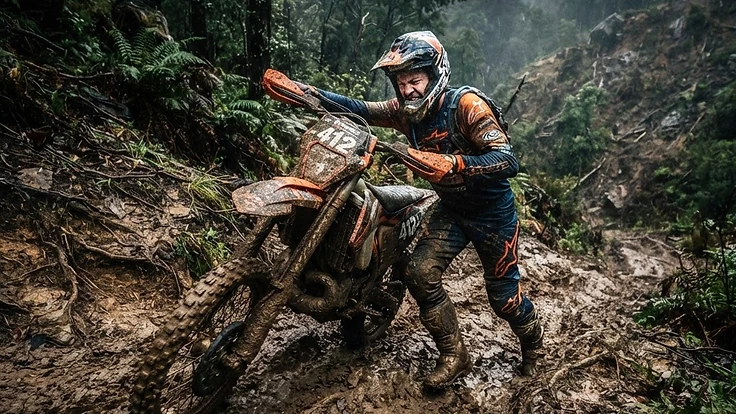
A practical, step-by-step guide to recovering when you stall, stop, spin out, or lose line on a steep climb or descent. You’ll learn how to stabilize the bike, choose the safest option, turn around on a hill, back down under control, and avoid the mistakes that make a simple recovery turn into a crash.
How to Get Unstuck: Hill Recovery Techniques
Hills expose every weak habit you have on a dirt bike. The good news is that most hill problems are not about bravery or horsepower; they are about a few simple recovery skills done in the right order.
If you can stop the panic, secure the bike, and choose the correct recovery, you can get out of steep, ugly situations with much less effort and a lot less risk.
First Priority: Secure the Bike Before You Do Anything Else
When you lose momentum on a hill, your first job is not to restart. It is to stop the situation from getting worse.
The moment you know the climb is over, do this in order:
- Pull in the clutch. This stops the engine from driving the rear wheel and helps prevent a stall from turning into a sudden hop or loop-out.
- Get on the rear brake immediately. On a hill, the rear brake is your anchor. Keep your right foot ready for it any time a climb starts going bad.
- Kill the engine if needed. If the bike is already stalled, fine. If it is still running but you are off balance and overloaded, hit the kill switch. A dead engine is often safer than a live one when you are fighting for position.
- Plant your uphill foot first if you can. The uphill side gives you more leverage and reduces the chance of the bike folding downhill on top of you.
- Keep the bike as straight as possible. A bike pointed straight up or down the hill is usually more stable than one sitting across the slope.
Do not rush to put both feet down if that puts you in a bad stance. One solid foot and brake control beats two weak stabs every time.
Read the Situation Before You Pick a Recovery
Once the bike is secure, take a breath and assess four things:
- Slope: Is it steep enough that a restart is risky?
- Traction: Are you on dirt, roots, rock, loose scree, wet clay, or deep ruts?
- Space: Is there room to turn around, or are you trapped between trees, rocks, or ledges?
- Energy: Are you fresh enough to execute properly, or are you already making bad decisions from fatigue?
From there, you usually have four options:
- Restart and continue up if traction and line are still good.
- Back the bike down if the climb is done and there is no clean restart.
- Turn the bike around on the hill and ride or walk down.
- Reposition the bike by hand if you are badly crossed up or stuck against an obstacle.
The mistake is trying to force option one when the hill is clearly telling you to choose option two or three.
Restarting on the Hill
A hill restart works only when the bike is stable, the line is still rideable, and you can launch with intent instead of hope.
Step by step
- Hold the bike with the rear brake. Stay calm and square to the bike.
- Select first gear. Do not overcomplicate it. First is the right choice most of the time.
- Position your body forward. Get your chest over the bars more than you think. On steep climbs, if you start too far back, you will unload the front and waste drive.
- Look at the next 10 to 20 feet, not the front fender. You need a target line immediately.
- Find clutch bite before releasing the brake. Bring revs up just enough for clean drive, not a panic rev.
- Release the rear brake smoothly as the clutch feeds power in. The brake release and clutch engagement should overlap.
- Commit to the first bike length. Most failed restarts happen because the rider hesitates and chops the throttle after three feet.
- Stay neutral, then adjust. If traction is good, stay centered-forward. If the rear hooks hard and the front gets light, lower your chest but stay loose.
If the rear instantly spins or the bike starts to loop, pull the clutch back in and stop the attempt. A bad restart usually gets worse on the second second, not the first.
Backing Down a Hill Under Control
This is the skill that saves you most often. If you cannot back down smoothly, every failed climb becomes a wrestling match.
The basic method
- Kill the engine if needed. A non-running bike is simpler when learning this.
- Keep the bike in first gear. This gives some engine compression resistance if the engine is running, and it prevents free-rolling surprises.
- Face uphill, not downhill. You should usually stand beside or slightly above the bike, looking up the hill while you walk it backward.
- Use the front brake carefully and the clutch if the engine is running. The front brake is easier to modulate while backing the bike. The rear brake is harder to control if you are not on the pegs. Use small inputs only.
- Move the bike in short steps. Roll it back 6 to 12 inches, stop it, reset your feet, then repeat.
- Keep the bike as upright as possible. Leaning it too far downhill invites a tip-over. Leaning it too far uphill can drag you off balance.
- Aim for a safe turnout or flatter patch. Do not back all the way to the bottom if you can stop earlier and regroup.
If the hill is very steep
Use a zig-zag retreat if the surface allows it. Back down a few feet, angle the front wheel slightly to one side, stop, reset, and continue. This reduces how much straight-line load the bike puts on you.
If you feel the bike starting to take over, do not fight it with your back. Lock a brake, pin the bike into the hill, and regain your footing before moving again.
Turning the Bike Around on the Hill
Sometimes you cannot restart and backing straight down is awkward or dangerous. Turning the bike around on the slope is then the cleanest solution.
Method 1: The controlled three-point turn
- Secure the bike with the brake and kill the engine.
- Turn the bars fully toward the uphill side. This helps bring the front wheel across the slope without immediately falling downhill.
- Drag or lift the front wheel uphill a small amount. You do not need a hero lift; you only need inches at a time.
- Let the rear pivot slightly downhill. The goal is to rotate the bike until it points more across the hill, then eventually downhill.
- Reset your feet after each movement. Do not rush continuous motion on steep ground.
- Once the bike points downhill enough to be stable, straighten the bars and prepare to descend.
Method 2: Front wheel anchor, rear wheel swing
This works well in tight hard enduro terrain.
- Hold the front brake.
- Wedge the front tire against a rut bank, rock, or root if available.
- Step to the uphill side of the bike.
- Lift or hop the rear wheel around in small moves.
- Repeat until the bike points downhill.
This is physically demanding, so use technique instead of force. Keep the bike close to your hips. Lift with your legs. Rotate in small increments.
Recovering When the Bike Is Sideways or Cross-Rutted
The worst hill stalls happen when the bike stops diagonally across the slope or with the wheels trapped in different ruts.
Do not try to ride out from that position. First, make the bike straight enough to give yourself a real option.
Step by step
- Kill the engine and secure the brakes.
- Move yourself to the uphill side if possible. This gives you leverage and keeps the bike from landing on you.
- Free the wheel with least load first. Often that is the front wheel. Lift or drag it into a cleaner line.
- Then reposition the rear wheel. Short hops work better than long heaves.
- Make the bike point either clearly uphill for a restart or clearly downhill for an exit. Avoid halfway solutions.
If you are alone and the bike is badly wedged, unload what you can. Even taking five pounds out of your backpack and removing a branch from the wheel area can change the problem.
Descending After a Recovery
A lot of riders do the hard part well, then throw it away on the ride down. Once the bike is turned around or backed to a restart point, descend deliberately.
- Stay standing if the terrain is rough enough to move the bike around.
- Keep your hips back but do not lock your arms straight.
- Use both brakes, with emphasis changing by traction. On loose dirt, be gentle and progressive. On rock, avoid grabs.
- Keep the clutch covered so you can stop a stall or skid from becoming a slide.
- Look where you want to go, not at the hole you just escaped.
If the descent is steeper than your confidence, walk the bike down with the engine off and the front brake modulated.
Drills to Practice Before You Need Them
Do not wait for a race or a big mountain ride to learn this. Practice on a moderate hill first.
Drill 1: Stop-and-restart
Ride halfway up, stop intentionally, hold with rear brake, and restart cleanly. Repeat until the brake-clutch overlap feels automatic.
Drill 2: Controlled back-down
Ride up a short hill, stop, then back the bike down in one-foot increments. Practice keeping the bike upright and your breathing calm.
Drill 3: Hill turn-around
On a safe slope with good runout, stop and perform a three-point turn until you can point the bike downhill without panic or wasted movement.
Drill 4: Cross-slope correction
Set the bike slightly diagonal on a hill and practice straightening it by hand. Learn how little movement is actually needed.
Common Mistakes
- Trying to restart before the bike is secure.
- Staring at the front wheel instead of picking a line.
- Letting go of the rear brake too early on a restart.
- Revving hard and dumping the clutch, which just spins the rear or loops the bike.
- Sitting too far back on the restart and unloading the front end.
- Trying to save a failed restart too long instead of stopping and resetting.
- Backing down too fast, then losing footing and dropping the bike.
- Standing on the downhill side of the bike where it can pin you.
- Turning the bars downhill while stopped, which often tips the bike that way.
- Leaving the bike diagonal across the hill and attempting to ride out from a bad angle.
- Fighting the bike with your back instead of moving it in short, controlled steps.
- Getting embarrassed, rushing, and making the hill a bigger problem than it was.
What to Carry and Think About on Big Hill Days
A few simple habits make recovery easier:
- Keep your clutch and brakes adjusted so one-finger control is easy.
- Run tires and pressure appropriate for the terrain.
- Know where your kill switch is without looking.
- Ride with enough fuel and energy that your decisions stay clear late in the day.
- On extreme terrain, talk with your group before the climb about where to stop, where to exit, and who helps whom.
Good hill recovery starts before the hill does. If your controls are wrong or your body position is lazy on the approach, your recovery options shrink fast.
What Good Looks Like
You recognize early that the climb is failing, secure the bike immediately, and stop the situation from running away. Then you choose one clear plan—restart, back down, or turn around—and you do it in calm, small, controlled steps.
When it goes right, the bike never feels like it is dragging you into a crash. You feel deliberate rather than rushed. The outcome is simple: the bike is stable, pointed where it needs to go, and you are back moving with traction and balance instead of surviving the moment.
Keep Reading


Join the Enduro University community
Create a free account to comment on this article, make race predictions, play daily trivia, build your virtual garage, enter the photo contest and climb the leaderboards.
Related Stories




Comments (0)
Be the first to comment.