Enduro Fitness: Training That Actually Transfers to the Bike
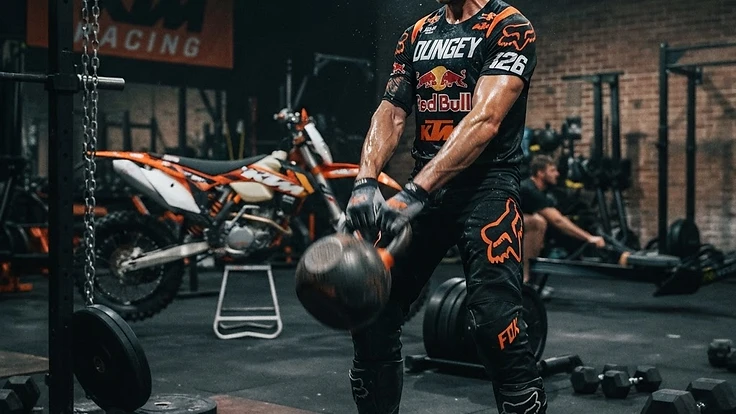
A practical, evergreen guide to building the kind of fitness that helps you ride longer, recover faster, and stay sharp on technical terrain. It focuses on aerobic base, repeatable power, grip and trunk strength, heat and fueling, and a weekly plan you can actually follow.
If you fade halfway through a ride, get arm pump early, or turn sloppy when the trail gets technical, the answer usually is not “just get fitter” in a vague way. You need fitness that matches what enduro riding actually asks of you: long periods on your feet, repeated hard efforts, strong braking posture, fast recovery, and the ability to stay precise when tired.
Understand What Enduro Actually Demands
Before you train, be clear about the job. Enduro is not a pure strength sport, and it is not a steady cardio sport either. You need four things working together:
- Aerobic base so you can ride for hours and recover between hard efforts.
- Short repeatable efforts for climbs, sprints, bike picks, and mistake correction.
- Postural strength and grip endurance so you can stay in position without hanging off the bars.
- Movement quality so your hips, ankles, shoulders, and trunk can absorb hits and let the bike move.
That means your training should look boring in the right places and hard in the right places. If every session leaves you crushed, you are probably training your fatigue more than your riding.
Build the Base First
If you only change one thing, build your aerobic engine. This is what lets you recover after a blown line, a hard hill, or a bike lift. It also helps keep your heart rate from spiking so fast that your forearms tighten and your decision-making goes downhill.
Do this 2 to 3 times per week:
- Pick a simple mode: running, rowing, cycling, brisk uphill walking, or a long easy spin on the mountain bike.
- Stay at a pace where you can speak in short sentences. If you use heart rate, this is roughly easy to moderate zone 2.
- Go for 35 to 60 minutes.
- Keep it steady. Do not turn it into intervals because you got bored.
After 4 to 6 weeks, add one harder aerobic session per week:
- Warm up 10 minutes.
- Ride or run 5 x 3 minutes hard but controlled, with 3 minutes easy between efforts.
- Cool down 10 minutes.
This gives you better repeatability without burying you.
Train Strength That Changes Bike Control
You do not need bodybuilding splits. You need strength that supports standing position, braking, lower-body stability, and upper-body endurance without making you stiff.
Train strength 2 times per week. Keep it simple:
Session A
- Front squat or goblet squat: 3 to 5 sets of 5 to 8
- Romanian deadlift: 3 to 4 sets of 6 to 8
- Pull-ups or assisted pull-ups: 3 to 4 sets of 5 to 8
- Push-ups or dumbbell bench: 3 sets of 8 to 12
- Farmer carry: 4 carries of 20 to 40 meters
- Side plank: 3 sets of 30 to 45 seconds each side
Session B
- Split squat or reverse lunge: 3 to 4 sets of 6 to 8 each leg
- Trap-bar deadlift or kettlebell deadlift: 3 to 5 sets of 4 to 6
- Single-arm row: 3 sets of 8 to 10 each side
- Overhead press: 3 sets of 6 to 8
- Dead bug or hollow hold: 3 sets
- Wrist extensor work with a light dumbbell or band: 2 to 3 sets of 15 to 20
Rest 60 to 120 seconds between sets. Stop 1 to 2 reps before failure. You are training for better riding, not trying to limp through the next day.
Fix Grip by Changing the Cause
Most riders attack grip fatigue with endless squeezing exercises. That usually misses the real problem. Your forearms blow up because you are over-gripping, carrying too much weight through the bars, and riding above your breathing capacity.
Train grip, but do it smart:
- Improve your body position on the bike. Hinge at the hips, keep your chest over the working area, and support yourself with your legs.
- Build upper-back endurance. Rows, carries, and hanging work help more than random hand grippers.
- Train forearm extensors. Light reverse curls, rubber-band finger opens, and wrist extension balance the constant flexor load from riding.
- Use short hangs. 3 to 5 sets of 20 to 30 seconds from a bar or towels. Stop before pain.
- Breathe on purpose when riding. Exhale in rough sections and after obstacles. Holding your breath is a direct path to tension.
If your elbows or wrists get irritated, reduce direct grip work first. Too much is worse than too little.
Add Mobility Where Riders Actually Need It
You do not need an hour of stretching. You need enough range to stand well, move under you, and not fight the bike.
Spend 8 to 12 minutes, 4 to 6 days per week, on these areas:
- Ankles: knee-to-wall ankle mobility, 1 to 2 minutes each side
- Hips: deep squat hold with support, hip flexor stretch, 1 to 2 minutes each
- Thoracic spine: open books or foam roller extensions, 1 to 2 minutes
- Shoulders and wrists: controlled circles, wrist extension stretch, 1 minute each
Do this after training or in the evening. The goal is better position, not chasing extreme flexibility.
Fuel and Hydrate Like a Rider, Not a Spectator
A lot of “fitness problems” are really hydration and fueling mistakes. If you start a ride under-fueled, you will feel weak, tense, and mentally slow.
Use this baseline:
- Before riding: eat a normal meal 2 to 3 hours before, with carbs and some protein.
- For rides over 90 minutes: take in 30 to 60 grams of carbs per hour.
- Drink regularly: around 500 to 750 ml per hour in moderate conditions, more in heat.
- Use sodium: especially if you sweat heavily. Sports drink or electrolytes help.
- After hard rides: eat protein and carbs within a couple of hours.
If you cramp, fade badly, or get headaches, start by checking fluid, sodium, and carbs before blaming your fitness.
A Week You Can Actually Follow
If you ride on the weekend, here is a simple structure:
- Monday: easy aerobic 35 to 45 minutes + mobility
- Tuesday: strength session A
- Wednesday: easy aerobic 40 to 60 minutes
- Thursday: strength session B + short mobility
- Friday: interval session 5 x 3 minutes hard, or rest if tired
- Saturday: ride
- Sunday: ride or easy recovery walk/spin
If life is busy, cut volume before cutting consistency. Three solid sessions every week for months beats one heroic week and then nothing.
Common Mistakes
- Training hard every day and never building a proper aerobic base
- Chasing arm strength instead of fixing body position and breathing
- Lifting to failure and carrying fatigue into every ride
- Ignoring lower body strength, even though your legs should support you on the bike
- Doing random circuits with no progression, no plan, and no recovery
- Stretching aggressively when what you really need is basic mobility and better control
- Skipping carbs and electrolytes on long rides, then wondering why you feel weak and tight
- Copying motocross or road cycling plans without adapting them to technical off-road riding
- Testing yourself all the time instead of stacking weeks of consistent work
- Forgetting sleep, which is where adaptation actually happens
What Good Looks Like
You should notice that your heart rate settles faster after hard sections, your hands stay calmer, and your technique survives deeper into the ride. You can stand in a strong neutral position longer, brake harder without folding, and make cleaner decisions when tired.
Good enduro fitness does not feel like being hyped up. It feels like having a bigger margin. You still work hard, but you stop feeling rushed by the bike, rushed by the terrain, and rushed by your own fatigue.
Keep Reading


Join the Enduro University community
Create a free account to comment on this article, make race predictions, play daily trivia, build your virtual garage, enter the photo contest and climb the leaderboards.
Related Stories




Comments (0)
Be the first to comment.