Electric Enduro: Where the Technology Actually Stands

A practical, rider-first guide to what electric enduro bikes do well, where they still struggle, and how to judge the technology without hype.
If you ride tight woods, technical climbs, and short hard loops, electric enduro is no longer a novelty. But if you expect it to replace a petrol enduro bike everywhere, all day, with no compromises, you’ll be disappointed.
Start With Your Riding Reality
Before you talk power, batteries, or charging, define your actual use. This is where most bad buying decisions start.
Work through these questions in order:
- How long is your normal ride? 45 minutes, 90 minutes, 3 hours, or a full day matters more than top speed.
- What terrain do you ride most? Tight technical singletrack and hard enduro use energy differently than flowing fire roads.
- How often do you stop? Frequent pauses help battery temperature and can make limited range workable.
- Can you charge where you ride? Home, van, paddock, generator, or no access changes everything.
- Do you need road legality? Some electric off-road bikes are great in the woods but awkward for mixed road-and-trail use.
If most of your riding is short, technical, and local, electric makes a lot of sense already. If your normal day is long-distance linking, remote loops, or racing with no charging support, current electric still asks for compromises.
Understand the Four Limits That Matter
Ignore brochure horsepower for a minute. In real enduro, four things decide whether an electric bike works for you.
1. Usable energy
Battery size is your fuel tank. The important number is not peak power; it is how much energy you can actually use before performance drops or the bike asks for a recharge.
Your range changes fast with:
- rider weight
- tire choice and pressure
- mud, sand, and deep climbs
- speed on open sections
- how often you spin the rear tire
In technical riding, smooth riders usually get far more ride time than aggressive riders who attack every section with wheelspin.
2. Heat management
Electric bikes make strong torque easily, but repeated hard climbs, deep mud, and slow-speed abuse build heat in the battery, motor, and controller. On a test ride, this matters more than a quick blast around a field.
A bike that feels brilliant for 15 minutes but reduces output after repeated hard sections is not ready for your riding.
3. Weight distribution
Electric bikes can carry weight low and centrally, which helps balance. But total weight still matters, especially when the bike is stuck sideways on a hill or needs lifting over logs.
What you should care about is not just scale weight. Care about:
- how heavy it feels at walking pace
- how easily you can change lines mid-obstacle
- whether the front stays planted on off-camber turns
- how tiring it is to recover a mistake
4. Recharge time and logistics
This is the real dividing line between “works brilliantly” and “doesn’t fit my life.” A good electric enduro setup is not just the bike. It is the charger, your access to power, and your ride plan.
If you can ride, recharge during a break, then ride again, electric is much easier to live with. If your rides are far from power and you need instant refueling, petrol still has the simpler system.
Where Electric Already Works Very Well
Here is where current electric enduro is genuinely strong.
Tight technical terrain
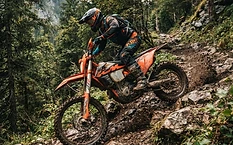
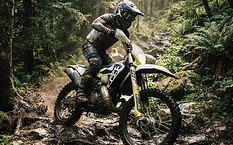
Instant torque, precise throttle response, and no clutch work make hard, awkward terrain easier to ride cleanly. You can focus on balance and line choice instead of managing flameouts, stalling, and clutch heat.
Practice days
Electric is excellent for skill work. You can repeat turns, logs, pivots, and hill starts with less noise, less fatigue from clutching, and less maintenance between sessions.
Noise-sensitive areas
This is a major practical advantage. Quiet bikes open training options near places where a loud petrol enduro would quickly cause complaints.
Riders who value traction over drama
Electric power can be very controllable. When mapped well, it helps you crawl, reset, and drive forward without the hit that can upset the chassis.
Where It Still Falls Short
This is where you need to be honest.
Long remote rides
If your day depends on quick refueling and big mileage, battery limits still matter. You can manage around them, but you are managing around them.
Back-to-back race pace
Sustained high load exposes heat and range issues quickly. Some bikes cope well; others start strong and fade.
Fast transfers and dual-use practicality
At speed, energy use rises hard. If your rides include long transport sections, road stretches, or open terrain, the efficiency advantage of technical riding disappears.
Support and parts
With petrol bikes, most riders understand the systems. With electric, dealer quality, software support, battery policy, and replacement cost matter more. A great bike with weak support is a bad ownership experience.
How to Test One Properly
Do not buy on first-impression torque. Test it like you would evaluate a race bike.
- Ride it cold and ride it hot. You want to know if performance changes after repeated hard sections.
- Do a proper technical loop. Include a climb, a slippery turn, a log, and a slow rocky section.
- Check low-speed control. See if it crawls cleanly without snatch.
- Deliberately make a mistake. Stall-speed recovery, awkward restarts, and feet-up balance tell you a lot.
- Watch battery use, not just ride time. A bike can feel great while draining too quickly for your normal loop.
- Lift it and drag it. If you ride real enduro, at some point you will manhandle it.
- Ask about charging from empty and from mid-pack. Real life is often partial charging, not perfect lab conditions.
- Ask what power reduction looks like. Does it taper gently or fall off sharply?
How to Set It Up for Real Enduro Use
If you already own one, setup matters.
- Choose the softest map that still drives forward cleanly. Too much hit wastes energy and traction.
- Run tires for grip, not ego. Wheelspin burns battery and time.
- Set sag carefully. Electric bikes often respond strongly to chassis balance because the drive is so immediate.
- Protect the underside and motor area well. Technical riding still punishes hardware.
- Plan your loop around your real range, not your best-case range. Build a margin.
- Monitor heat on hard days. Repeated big climbs in hot weather can change the bike’s behavior.
- Practice no-clutch body timing. You still need to preload, unweight, and place the bike accurately.
Common Mistakes
- Buying for peak power instead of usable ride time
- Testing on easy ground and assuming it will be the same on long technical climbs
- Ignoring charging access until after purchase
- Using aggressive throttle maps that waste traction and battery
- Comparing quoted range between riders without matching terrain and pace
- Forgetting recovery weight: a bike that feels fine rolling can still be a pig when stuck
- Assuming “low maintenance” means “no maintenance”
- Treating silence as a substitute for proper trail etiquette
- Expecting one electric bike to cover trials-style hard enduro, fast cross-country, and all-day adventure equally well
What Good Looks Like
Good looks like this: you finish your normal loop with range in hand, the bike feels the same at the end as it did near the start, and you never have to ride around battery anxiety instead of terrain. The power is smooth enough that you get more traction, make fewer mistakes, and waste less energy fighting wheelspin or clutch work.
You should come back thinking about the sections you cleaned, not the spec sheet. If the bike fits your terrain, your ride length, and your charging reality, electric enduro already works very well. If it does not, the limitation is usually not torque or fun. It is logistics.
Keep Reading


Join the Enduro University community
Create a free account to comment on this article, make race predictions, play daily trivia, build your virtual garage, enter the photo contest and climb the leaderboards.
Related Stories



Comments (0)
Be the first to comment.