Body Position: The Foundation Every Enduro Rider Gets Wrong

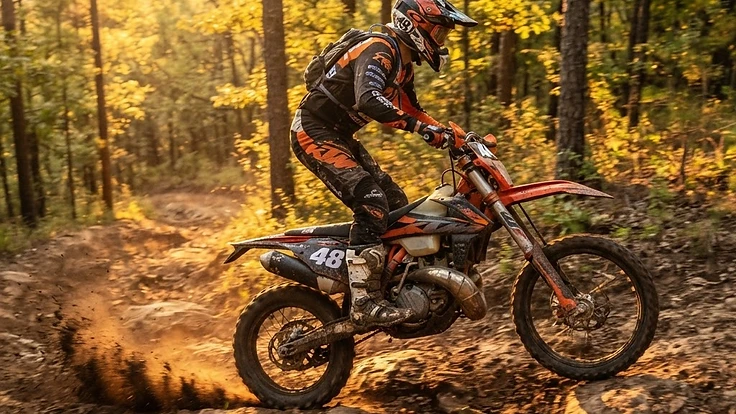
A practical, in-depth guide to enduro body position: how to stand, sit, brake, corner, climb, descend, and move on the bike so you get traction, control, and less fatigue. Written as a step-by-step evergreen reference with real mistakes and clear cues you can use on the trail.
Body position is not a style choice in enduro. It is the difference between a bike that feels nervous and heavy, and one that suddenly starts finding traction and turning underneath you. Most riders think they need more aggression, more speed, or better suspension when what they really need is a better relationship with the bike.
Why Body Position Matters
Your motorcycle only has two tire contact patches touching the ground. Everything you do with your hands, feet, hips, and chest changes how those two patches load the dirt. Good body position does three things at once:
- It keeps the bike balanced front to rear.
- It lets the suspension work instead of fighting it.
- It saves energy so you can ride longer without getting tense.
A lot of riders treat body position like a static pose. It is not. Think of it as a moving base position that you return to over and over, then adjust slightly for braking, cornering, climbing, descending, and impacts. The goal is not to look good. The goal is to stay centered, light on the controls, and ready for the next hit.
Start With Neutral Standing Position
If you only fix one thing, fix your neutral standing position. This is your home base. Every technical move starts here and returns here.
Set it up step by step:
- Stand on the footpegs, not on the seat. Your weight should go through your feet first. The bars are for guidance, not for holding yourself up.
- Put the balls of your feet on the pegs when you are cruising or scanning terrain. This gives you ankle range and helps absorb impacts. Move your feet slightly forward only when you need precise brake or shift input.
- Bend your knees and hips. Do not stand straight-legged. Think athletic, like you are ready to jump sideways.
- Keep your chest slightly forward, but not collapsed onto the bars. You are not doing a push-up over the front fender. Your torso should be active and balanced.
- Keep your elbows up and out, but relaxed. Not motocross-high for the sake of it. Just enough that your arms are not tucked into your ribs.
- Look well ahead. Your head should be over the bar area, eyes up, scanning where you want the bike to go.
- Grip the bike lightly with your lower legs. Not a death squeeze. Just enough contact so your hands can stay light.
A simple cue: if someone removed your handlebars for one second, would you fall on the tank? If yes, you are leaning on your hands too much.
Fix Your Weight Distribution
The most common body-position error is being too far back all the time. Riders hear “get back” and turn it into their default posture. That works only in a few moments, mostly steep descents or heavy impacts. Everywhere else, it unloads the front tire and makes the bike push, wander, and deflect.
In neutral, think centered over the pegs. Your hips should be roughly over your feet. Your shoulders should be slightly ahead of your hips, but your weight should still feel supported by your legs.
Use these checks:
- If the front tire feels vague in corners, you are probably too far back.
- If your arms pump up quickly, you are probably holding yourself up with the bars.
- If the rear tire hooks up but the bike refuses to turn, your body is likely behind the balance point.
A good enduro stance puts enough load on the front contact patch that the bike will steer, but not so much that you bury the fork and lose freedom to move.
Use Your Legs as Suspension
Your legs are not just there to hold you on the bike. They are active suspension.
On trail junk like roots, embedded rock, holes, and braking bumps, your knees and ankles should open and close constantly. Let the bike move underneath you. That means:
- When the bike comes up into you, absorb it with bent joints.
- When the bike drops away, stay connected without stomping downward.
- When traction is inconsistent, stay soft so the chassis can settle.
A stiff rider turns every impact into a bar hit. A loose, active rider lets the motorcycle dance without pulling them out of position.
One useful cue: ride as if your helmet should stay at a more constant height than the bike beneath you. The bike can move a lot. Your upper body should move less.
Hands, Arms, and the Front End
Most riders over-control the front end. They steer too much with the bars and not enough with weighting, foot pressure, and line choice.
Here is what your upper body should do:
- Keep a neutral wrist angle. If your wrists are bent sharply upward or inward, you will tense your forearms.
- Carry your elbows in a strong but relaxed position. If your elbows collapse, you lose leverage. If you force them unnaturally high, you get stiff.
- Support your body with your core and legs, not your grip. Your hands should be light enough that you can feel the front tire, not strangle it.
- Push the bike forward into obstacles instead of pulling yourself backward. On ledges, roots, and rocks, riders often yank on the bars. Better riders stay balanced and let the front wheel climb with momentum and timing.
If your palms are sore and your forearms are pumped, your body position is likely wrong before your fitness is wrong.
Feet, Peg Pressure, and Lower Body Control
Your feet are where most subtle control happens. Enduro riders talk a lot about throttle and clutch, but peg weighting is what often makes the bike settle and turn.
Focus on these habits:
- Stay heavy through the pegs. This lowers your center of mass into the bike.
- Use outside-peg pressure in turns. It gives you stability and helps the bike lean underneath you.
- Stay light and centered over both pegs in chop and rocks. Do not pin all your weight to one side unless the terrain asks for it.
- Keep your toes in. If your toes point outward, you will catch them on stumps, rocks, or ruts.
A lot of riders think they are balanced because they are standing. They are not actually balanced until their feet are carrying most of the load.
When to Sit and How to Sit Correctly
Standing is your default in technical enduro, but sitting still matters. The mistake is not sitting. The mistake is sitting badly.
Sit when you need:
- rear-wheel traction on flatter turns
- a short rest on smoother trail
- precise low-speed steering in some situations
- a lower body position in slick corners
When you sit:
- Move forward enough that you can still load the front tire.
- Keep your chest active, not slumped.
- Keep one strong outside leg supporting the bike in turns.
- Get back up as soon as the terrain becomes rough, steep, or unpredictable.
Do not sit on the rear of the seat and expect the front end to behave. That is a common reason bikes refuse to carve tight corners.
Body Position Under Braking
Braking is where bad habits show up fast. Many riders either lock their elbows and get dragged forward, or they sit too early and overload the front.
On the brakes, do this:
- Stand in neutral before the braking zone.
- Hinge slightly at the hips as speed comes off.
- Shift your hips just enough rearward to resist deceleration, but do not fully retreat behind the pegs.
- Keep pressure through the footpegs so the bike stays stable.
- Keep your head up and eyes ahead.
- Keep your arms loose enough that the fork can compress without transferring every force into your shoulders.
The key is measured movement, not dramatic movement. You are balancing braking force, not escaping it.
Body Position in Flat Corners and Ruts
Flat corners expose lazy body position. If you are too upright, too far back, or too dependent on bar input, the front pushes and the rear drifts at the wrong time.
For a flat corner:
- Finish most of your hard braking before maximum lean.
- Enter standing or transition lightly seated depending on traction and speed.
- Get your weight slightly forward so the front tire bites.
- Weight the outside peg.
- Lean the bike more than your body in low-traction conditions.
- Keep your inside leg ready only if needed; do not wave it around by default.
- Look through the exit and let the bike come back under you as you drive out.
In a rut, the mistake is fighting the rut with upper body tension. Instead, stay loose, trust the front, keep your eyes up, and let the wheels track. Your body should stay centered and calm while the bike angles beneath you.
Body Position on Climbs
Climbs are where riders either get it perfect or make the bike feel twice as heavy.
On a climb:
- Approach in neutral standing position.
- As the hill steepens, move your chest forward and lower toward the bars without collapsing onto them.
- Keep your hips over the pegs or only slightly behind them.
- Squeeze the bike with your legs and stay loose in the arms.
- Look up the hill, not at the front fender.
- If traction is poor, stay smooth and avoid abrupt body shifts.
The goal is to keep the front end from lifting too much while still letting the rear tire dig. If you move too far back, the front wanders. If you lunge too far forward, you smother the bike and lose rear traction.
On very steep, ledgy climbs, timing matters even more. Preload with your legs, stay committed forward, and let the bike rise into you without yanking the bars.
Body Position on Descents
Descents are one of the few times “back” is useful, but riders still overdo it.
For steep downhills:
- Stand with bent knees and hips.
- Move your hips rearward enough to counter the slope.
- Keep your arms extended but not locked.
- Keep your head up and your chest from collapsing too low.
- Stay connected through the pegs so the rear brake remains controlled.
- Let the bike pitch under you rather than freezing stiff.
If you go too far back, your feet get light and you stop controlling the bike. Think balanced rearward, not hanging off the fender.
Body Position Over Rocks, Roots, and Logs
Technical terrain punishes riders who are late with movement.
For loose rocks and roots:
- Stay light in the hands.
- Keep momentum steady.
- Let the front wheel hunt slightly without panicking.
- Absorb deflection with your legs.
For logs or square edges:
- Approach in a centered standing stance.
- Just before contact, compress slightly through your legs.
- As the front meets the obstacle, lighten the front with timing, clutch, and a subtle rearward-unweighting move.
- As the rear wheel hits, return to centered so the bike does not kick.
The big mistake here is pulling on the bars and then staying back too long. You may get the front over, but the rear slams and the bike bucks.
A Simple Practice Routine
You do not fix body position by thinking harder on race day. You fix it with short, specific drills.
Try this routine:
- Neutral stance drill: On flat ground, stand for five minutes at easy speed. Keep weight through the pegs and wiggle your fingers every few seconds to confirm light hands.
- Front-load drill: On a smooth corner, make repeated turns while consciously moving slightly forward and weighting the outside peg. Feel when the front starts to bite.
- Brake-position drill: Practice medium braking while standing. Focus on hinging at the hips, not sitting or locking your elbows.
- Impact absorption drill: Ride a line of small roots or braking bumps standing. Keep your helmet level and let your legs do the work.
- Climb and descend drill: Repeat the same short hill several times. On the way up, commit forward. On the way down, move rearward only as much as needed.
Film yourself if possible. Body position almost always feels different from how it looks.
Common Mistakes
- Standing straight-legged and calling it “attack position”
- Hanging too far off the back of the bike in normal trail riding
- Supporting your body weight with your hands
- Riding with stiff elbows and locked wrists
- Looking down at the ground right in front of the wheel
- Keeping your toes pointed outward and catching obstacles
- Sitting too far back in corners and unloading the front tire
- Trying to steer every problem with the handlebars
- Forgetting to return to neutral after an obstacle
- Staying seated when the terrain starts hitting the chassis hard
- Moving dramatically instead of making small, timely adjustments
- Copying motocross posture exactly in slow technical terrain
- Forcing elbows high while the rest of the body stays tense
- Pulling on the bars to clear logs instead of timing your weight and throttle
- Going so far back on descents that you lose control through the pegs
What Good Looks Like
Good body position does not look busy. It looks calm, balanced, and ready. The bike moves around underneath you, but your upper body stays composed, your hands stay light, and your feet carry the load.
When you get it right, the front tire starts tracking instead of pushing. The rear finds traction without kicking unpredictably. Braking feels controlled, climbs feel less dramatic, descents feel less scary, and technical hits stop ripping the bars out of your hands.
Most of all, good body position feels efficient. You are not wrestling the motorcycle. You are letting it work while you stay centered enough to help it, not interfere with it. That is the foundation. Once you have it, every other enduro skill becomes easier to learn and easier to repeat under pressure.
Keep Reading


Join the Enduro University community
Create a free account to comment on this article, make race predictions, play daily trivia, build your virtual garage, enter the photo contest and climb the leaderboards.
Related Stories



Comments (0)
Loading comments…