How to Bunny Hop an Enduro Motorcycle
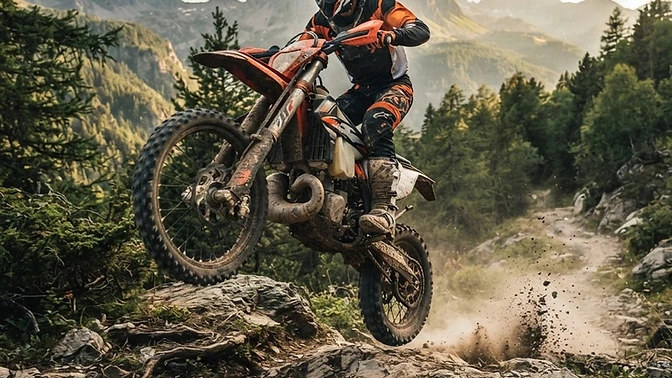
Master the art of the motorcycle bunny hop to clear logs, rocks, and washouts with this expert guide to body positioning, timing, and energy management.
The bunny hop is a hallmark skill of elite enduro riders, allowing you to clear trail obstacles like logs, rocks, and washouts without losing momentum. While it requires significant practice, mastering this technique transforms how you navigate technical terrain. This guide breaks down the physics and body mechanics required to get both wheels off the ground safely.
What It Is and Why It Matters
A true motorcycle bunny hop is not a simple jump; it is a coordinated sequence of energy management where you first lift the front wheel and then use your body weight to 'pop' the rear wheel into the air. Unlike a basic wheelie, the bunny hop requires you to compress the suspension and then explosively extend your body to create lift, effectively making the bike weightless for a split second.
This skill is vital because it allows you to clear obstacles that are too high to roll over or too dangerous to hit with your wheels. By mastering the bunny hop, you reduce the impact on your suspension, maintain higher average speeds through technical sections, and gain the confidence to tackle terrain that would otherwise force you to stop or dab your feet.
Step-by-Step Technique
- Pre-load the suspension — Approach the obstacle at a slow, controlled speed while standing in a neutral, balanced position. Just before the point of initiation, bend your knees and elbows to compress the bike's suspension. This downward pressure stores energy in the springs, which you will release to help launch the bike.
- Initiate the front lift — As you reach the takeoff point, shift your weight rearward while simultaneously pulling back on the handlebars. Do not rely solely on your arms; use your body weight to leverage the front end upward. The goal is to get the front wheel high enough to clear the obstacle's peak.
- The timing transition — Once the front wheel is at its peak height, immediately shift your weight forward and upward. This movement is critical because it unweights the rear of the motorcycle. You are essentially moving your center of gravity to allow the rear suspension to rebound freely.
- The rear wheel pop — As you shift forward, grip the bike firmly with your knees and 'jump' upward, pulling your feet toward your glutes. This motion, combined with the bike's natural rebound, forces the rear wheel to leave the ground. Think of it as trying to throw the rear wheel up into the air with your legs.
- Level the bike — In mid-air, push the handlebars forward slightly to level the motorcycle. This ensures that both wheels are parallel to the ground, which is essential for a stable landing. Keeping your eyes focused on the landing zone helps maintain your balance and trajectory.
- Absorb the landing — As the wheels make contact with the ground, keep your knees and elbows slightly bent to act as secondary suspension. Do not land with locked joints, as this will cause you to bounce and lose control. Allow the bike to settle beneath you before returning to your neutral riding position.
2-Stroke vs 4-Stroke Differences
The primary difference lies in the engine's rotating mass and power delivery. A 2-stroke engine is generally lighter and more responsive to quick throttle blips, making it easier to snap the front end up with a sharp burst of power. Conversely, a 4-stroke has more engine braking and rotating mass, which can make the bike feel more planted; you may need to rely more on body English and clutch timing to achieve the same lift compared to the lighter, snappier 2-stroke.
5 Common Mistakes (and How to Fix Them)
1. Pulling up with arms instead of using body weight.
Focus on shifting your hips rearward to leverage the bike's weight rather than just yanking the bars.
2. Trying to jump both wheels at the same time.
Practice the two-stage motion: front wheel up first, then the rear, to ensure proper clearance.
3. Landing with stiff legs and arms.
Keep your limbs loose and bent to absorb the impact, preventing the bike from bucking you off.
4. Looking down at the front wheel.
Keep your head up and eyes focused on where you want to land to maintain better balance.
5. Lack of clutch control during the lift.
Use a quick, precise clutch 'pop' to help snap the front wheel up if you are struggling to get enough height.
Practice Drill You Can Do in Your Yard
Find a flat, open area and place a small, soft obstacle like a pool noodle or a piece of garden hose on the ground. Practice approaching it at a walking pace and focusing solely on the timing of the front-wheel lift. Once you can consistently clear the object with the front wheel, add the rear-wheel pop by jumping your feet up. Repeat this until the motion feels fluid and automatic before moving to larger obstacles.
Motorcycle Setup & Tuning Notes
Ensure your suspension sag is set correctly for your weight, as improper sag will make the bike feel sluggish and unresponsive during the pre-load phase. Slightly faster rebound damping can help the bike 'pop' off the ground more effectively. Additionally, ensure your handlebar position allows for a comfortable, upright standing posture, as this is critical for effective weight transfer.
Frequently Asked Questions
Q: Do I need to use the clutch to bunny hop?
While you can do it with body weight alone, using a quick, precise clutch pop is highly recommended to help snap the front wheel up, especially on larger obstacles.
Q: Is it easier to bunny hop a lighter bike?
Yes, a lighter bike requires less physical effort to unweight and maneuver, making the learning process significantly faster and less fatiguing.
Q: How high should I aim to jump?
Start by aiming to clear just a few inches; the goal is to clear the obstacle, not to get maximum airtime. Focus on technique and consistency before trying to increase your height.
Q: Can I practice this on a mountain bike?
Absolutely, practicing the bunny hop on a mountain bike is an excellent way to learn the timing and body mechanics without the weight and power of a motorcycle.
Related Techniques


Relevant Bike
KTM 350 EXC-FTrack your progress and join the community
Create a free account to save the technique guides you've mastered, make race predictions, play trivia, and connect with enduro riders worldwide.