How to Choose the Right Line Through a Rock Garden
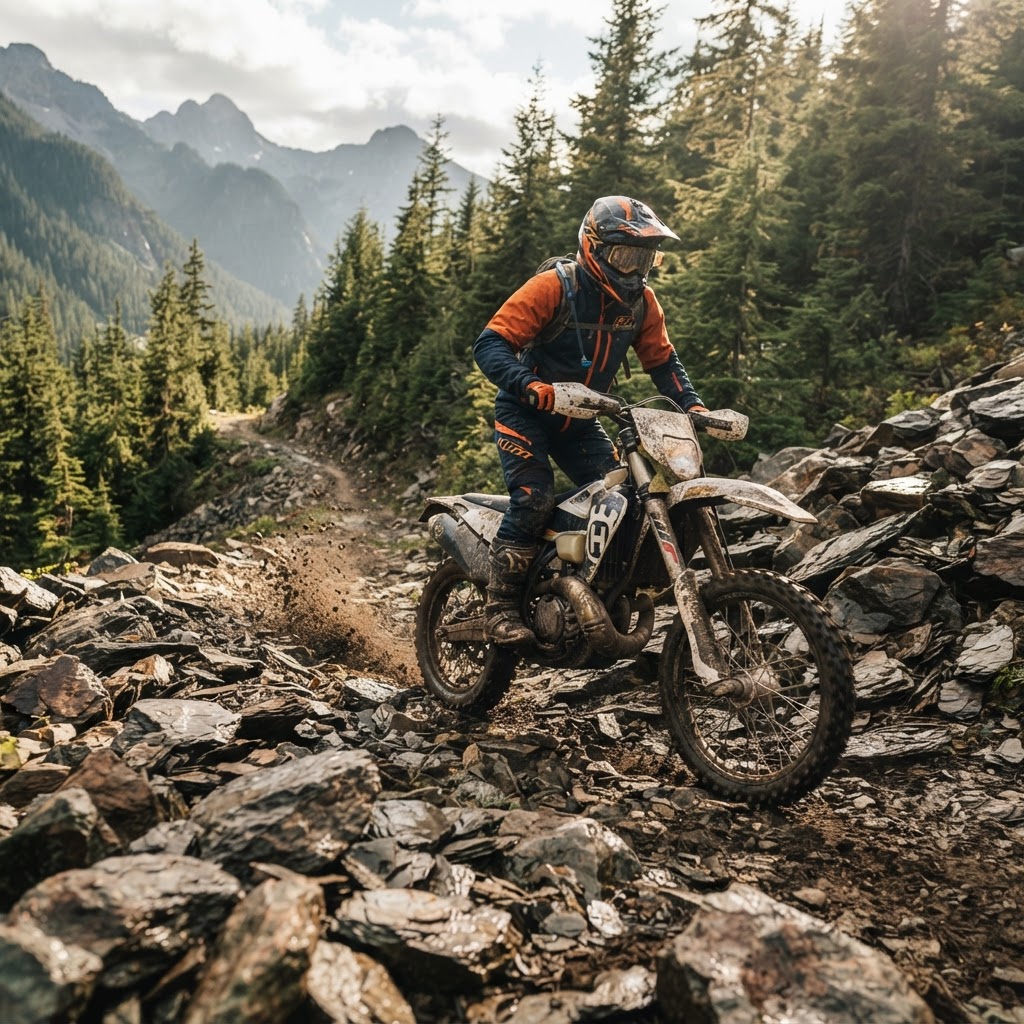
Master rock gardens by learning to read terrain, maintain momentum, and keep your bike light to navigate technical obstacles with confidence and speed.
Rock gardens are the ultimate test of an enduro rider's focus, balance, and technical precision. Choosing the right line through these chaotic boulder fields is the difference between a smooth, efficient passage and getting hung up on a jagged edge. This guide will teach you how to read the terrain and navigate rocks with confidence.
What It Is and Why It Matters
Choosing a line through a rock garden is about identifying the path of least resistance while managing your bike's energy. It is not just about avoiding rocks; it is about finding a sequence of surfaces that allow your suspension to work effectively and your wheels to maintain forward momentum. A good line often involves staying high on the rocks rather than getting trapped in the deep, loose cracks where your skid plate or frame can easily bottom out.
Mastering this skill matters because rock gardens are often where races are won or lost. By learning to look ahead and pick a deliberate path, you reduce the amount of energy wasted on unnecessary corrections and sudden stops. When you stop reacting to every individual rock and start riding the flow of the terrain, you gain the stability needed to clear even the most intimidating sections.
Step-by-Step Technique
- Scan and Commit Early — As you approach the rock garden, keep your eyes up and scan the entire section to identify your intended path. Do not fixate on the individual rocks you want to avoid, as your bike will naturally follow your gaze. Commit to a line early so you can adjust your speed and body position before you enter the chaos.
- Scrub Speed Before Entry — Enter the rock garden with controlled momentum rather than excessive speed. Scrub your speed in the smoother, flatter section of the trail just before the rocks begin. Once you are inside the garden, you want to avoid heavy braking, which can cause the front end to dive and deflect off obstacles.
- Maintain a Neutral Attack Position — Keep your body centered over the bike with your elbows up and knees slightly bent to act as secondary suspension. Avoid leaning too far back, which can unweight the front wheel and make steering unpredictable. Stay loose and allow the bike to move underneath you as it tracks over the uneven surface.
- Keep the Front End Light — Use a subtle push-pull technique on the handlebars to keep the front wheel light as you encounter larger boulders. By unweighting the front, you prevent it from slamming into square-edged rocks that could stop your momentum. A light front end allows the bike to roll over obstacles rather than hitting them head-on.
- Weight the Rear Pegs — Shift your weight back slightly to increase traction on the rear tire, which helps drive the bike forward through loose sections. Keep your heels down and toes up to ensure your boots stay planted on the pegs. This rear-biased weighting helps the bike track straight and prevents the rear wheel from spinning out on slick surfaces.
- Avoid the Deep Cracks — Whenever possible, choose a line that stays on top of the rocks rather than dropping into the deep, narrow gaps between them. The cracks are often filled with loose debris and hidden hazards that can catch your footpegs or skid plate. Staying high on the rocks provides a more stable platform for your tires.
- Let the Bike Dance — Do not try to force the bike into a perfectly straight line, as the rocks will inevitably cause the bike to deflect. Squeeze the bike with your boots to maintain control, but keep your upper body relaxed to absorb the impacts. Allow the bike to dance underneath you, making only small, necessary corrections to stay on your chosen path.
2-Stroke vs 4-Stroke Differences
On a 2-stroke, you must be more precise with your clutch work to keep the engine in the powerband, as the lack of engine braking can make the bike feel less planted on steep, rocky descents. You will often need to 'blip' the throttle to loft the front wheel over larger obstacles. Conversely, a 4-stroke offers more consistent torque and engine braking, which helps the bike track through rocks with more stability. You can rely more on the engine's natural pull to tractor through technical sections without needing as much clutch finesse.
5 Common Mistakes (and How to Fix Them)
1. Fixating on the rocks you want to avoid.
Force your eyes to look at the clear path ahead; your bike will naturally follow your vision.
2. Gripping the handlebars too tightly.
Relax your grip and let the bike move; a death grip transfers every impact directly into your arms, causing fatigue.
3. Entering the section with too much speed.
Slow down before you hit the rocks so you can maintain control and pick your line accurately.
4. Trying to force the bike to stay perfectly straight.
Accept that the bike will deflect and move; focus on keeping your body centered and letting the bike dance.
5. Dragging the front brake through the rocks.
Keep your fingers off the front brake lever to prevent the wheel from locking up and deflecting off a rock.
Practice Drill You Can Do in Your Yard
Find a small, manageable pile of rocks or a short, rocky section in a safe area. Practice riding through it at a slow, walking pace while focusing on keeping your eyes up and your body centered. Repeat the section multiple times, trying to hit the exact same line each time to build muscle memory. Once comfortable, try to vary your line to see how different rocks affect the bike's stability.
Motorcycle Setup & Tuning Notes
Ensure your suspension sag is set correctly for your weight to keep the bike balanced. Slightly lower tire pressure can significantly increase grip and allow the tires to conform to the shape of the rocks. Finally, adjust your clutch and brake levers to a position that allows for easy, one-finger operation while standing.
Frequently Asked Questions
Q: Should I stand or sit in a rock garden?
Always stand in the attack position. Standing allows you to use your legs as extra suspension and keeps your weight centered for better balance.
Q: What do I do if I lose momentum?
If you lose momentum, stay calm and use your clutch to find traction. Avoid putting your feet down unless absolutely necessary, as this often leads to getting stuck.
Q: Is it better to go over or around rocks?
It is usually better to go over rocks that are stable and rounded. Avoid sharp, square-edged rocks that can stop your forward progress.
Q: How do I stop the bike from deflecting?
Deflection is often caused by hitting rocks at an angle or having a stiff body position. Keep your weight centered and your grip loose to allow the bike to track over obstacles.
Relevant Bike
KTM 350 EXC-FTrack your progress and join the community
Create a free account to save the technique guides you've mastered, make race predictions, play trivia, and connect with enduro riders worldwide.