How to Cross Logs on an Enduro Bike

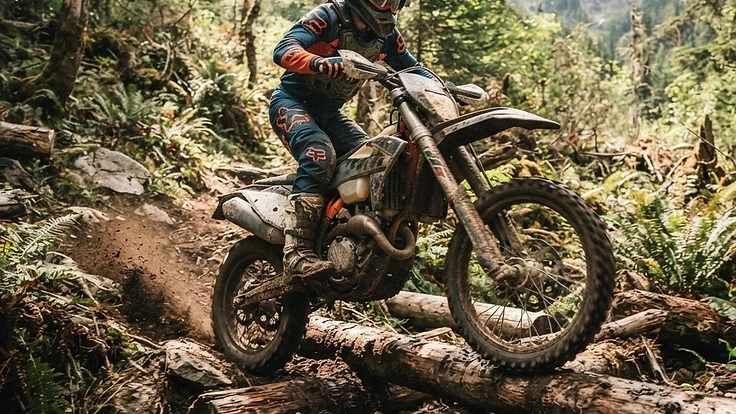
Master the art of crossing logs by using proper body positioning, clutch control, and suspension loading to clear obstacles with confidence and precision.
Crossing logs is a fundamental skill that separates casual trail riders from confident enduro competitors. Mastering this technique allows you to maintain momentum through technical terrain without relying on luck or brute force. By understanding how to manipulate your bike's suspension and power delivery, you can turn intimidating obstacles into simple trail features.
What It Is and Why It Matters
Log crossing is the art of using your motorcycle's suspension rebound and engine torque to lift the bike over an obstacle rather than simply smashing into it. It involves a coordinated effort of body weight transfer, precise throttle application, and clutch modulation to ensure both wheels clear the log without getting hung up on the skid plate or frame.
This skill is vital because it preserves your energy and protects your bike from unnecessary damage. When performed correctly, you maintain forward momentum and balance, which is critical for navigating tight, technical sections where stopping or stalling could lead to a loss of control or a difficult restart on a steep incline.
Step-by-Step Technique
- Approach with Purpose — Approach the log perpendicularly to ensure both wheels hit the obstacle squarely and avoid deflection. Maintain a standing position with your knees slightly bent and your core engaged to act as a shock absorber. Keep your eyes focused on the top of the log rather than looking down at your front wheel.
- Coil Your Body — As you get within a few feet of the log, compress your body by bending your elbows and knees to load the suspension. This 'coiling' motion stores energy in the bike's springs, which you will release at the moment of impact. Keep your weight centered to ensure the bike remains stable and predictable.
- The Initial Front Wheel Lift — Just before the front tire reaches the log, give the throttle a quick, sharp blip while simultaneously pulling the clutch. This lightens the front end, allowing you to loft the wheel so it makes contact about two-thirds of the way up the log's face. Avoid pulling the wheel too high, as you want the tire to strike the log to compress the fork.
- Compress and Load — As the front tire hits the log, the fork will compress, storing energy for the next phase of the move. Keep your weight slightly back to prevent the front end from diving too deep into the obstacle. This compression is the key to the 'double-blip' technique, as it prepares the bike to rebound over the log.
- The Second Blip — As the fork begins to rebound, give the engine a second, more aggressive burst of power while releasing the clutch. This surge of torque, combined with the natural rebound of the suspension, pushes the bike forward and upward. This motion lifts the skid plate and engine over the log, preventing it from getting stuck.
- Clear the Rear — As the bike moves forward, keep your weight neutral or slightly forward to help the rear tire find traction on the log. Avoid chopping the throttle, as you need consistent power to drive the rear wheel over the obstacle. Once the rear tire makes contact, let the bike's momentum carry you over the top.
- Recover and Ride — Once the rear wheel clears the log, immediately return to your neutral riding position and look ahead to the next section of the trail. Do not sit down until you are completely clear of the obstacle and have regained your balance. Smoothly transition back into your normal riding pace.
2-Stroke vs 4-Stroke Differences
Two-stroke engines offer a more immediate, snappy power delivery that is ideal for the double-blip technique, as the engine revs quickly to provide instant lift. You must be precise with your clutch work to avoid unwanted wheelspin on slippery logs. Four-stroke bikes provide a broader, more predictable torque curve, which allows for a more controlled, lugging approach. While they are heavier, the extra rotating mass of the crankshaft can help maintain momentum once you have initiated the move over the log.
5 Common Mistakes (and How to Fix Them)
1. Looking down at the front wheel instead of ahead.
Force your eyes to scan the trail 10-15 feet ahead to maintain balance and line choice.
2. Sitting down while crossing the log.
Always stand up to allow your legs to act as secondary suspension and keep your center of gravity high.
3. Chopping the throttle upon impact.
Keep the throttle steady or slightly increasing to ensure the rear wheel drives over the log.
4. Hitting the log at an angle.
Adjust your line early so you approach the log at a 90-degree angle to prevent the front wheel from sliding out.
5. Failing to use the clutch.
Practice slipping the clutch to control power delivery and prevent the engine from stalling or surging.
Practice Drill You Can Do in Your Yard
Find a small, manageable log or a piece of timber in a flat, open area. Practice approaching the log at a slow, walking pace and focusing solely on the timing of the front wheel lift and the subsequent throttle blip. Repeat this until you can consistently clear the log without the skid plate hitting. Gradually increase the size of the log as your confidence and timing improve.
Motorcycle Setup & Tuning Notes
Ensure your suspension sag is set correctly for your weight to allow the bike to rebound effectively. Slightly lower tire pressure can significantly increase traction on slippery or wet logs. Adjust your clutch lever position so you can operate it with one or two fingers comfortably while maintaining a firm grip on the handlebar.
Frequently Asked Questions
Q: How high of a log can I cross with this technique?
With practice, this technique can clear logs up to the height of your bike's engine cases. For larger obstacles, focus on perfecting your timing rather than increasing speed.
Q: What should I do if my bike gets stuck on the log?
If you get hung up, keep your weight forward to maintain traction and try to 'rock' the bike by blipping the throttle. If that fails, dismount and push the bike over while keeping the engine running.
Q: Is it better to hit the log fast or slow?
For technical logs, a controlled, slower approach is safer and more precise. High-speed approaches are generally reserved for racing or very small, flat logs.
Q: Do I need a trials bike to learn this?
No, while trials bikes make it easier to learn the mechanics, you can master these techniques on any standard enduro motorcycle. The principles of weight transfer and clutch control remain the same.
Related Techniques


Relevant Bike
KTM 350 EXC-FTrack your progress and join the community
Create a free account to save the technique guides you've mastered, make race predictions, play trivia, and connect with enduro riders worldwide.