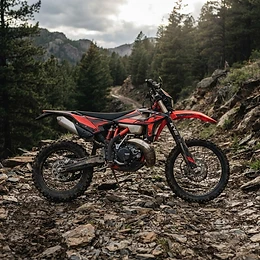
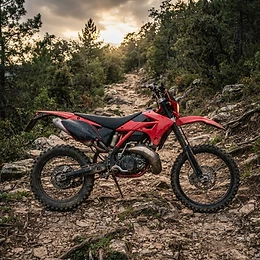
This comparison looks at the 2025 Beta 300 RR X-Pro and the 2025 GasGas EC 250, models you might also know by older or alternate names like the Beta RR 300 or GasGas EC 200. Both are electric-start, six-speed two-stroke enduro motorcycles, but they take different approaches to fuel delivery, displacement, and chassis dimensions.
Who Each Bike Suits
The Beta 300 RR X-Pro suits riders looking for a larger 292.6 cc engine and a traditional carburetor setup with electronic oil injection. Its lower seat height also makes it easier for shorter riders to manage the bike on tight, technical trails.
The GasGas EC 250 fits riders wanting a smaller 249 cc displacement and the modern convenience of throttle-body fuel injection. Its lighter-revving engine character and taller stance cater to riders who prefer those specific traits in their two-stroke enduro machines.
Key Differences
- Fuel System: The Beta uses a carburetor with electronic oil injection, while the GasGas features throttle-body fuel injection.
- Seat Height & Clearance: The Beta has a lower seat height at 930 mm and 320 mm of ground clearance. The GasGas sits taller with a 956 mm seat height and 354 mm of clearance.
- Weight: The Beta is listed at 103.5 kg (dry), and the GasGas is 107.6 kg (without fuel). Because these use different measurement standards, they are not directly comparable.
- Price: The Beta lists for $9,899 in the US before freight, which is $600 less than the GasGas EC 250 at $10,499.
- Suspension: Both feature 48 mm open-cartridge forks and linkage rear shocks. The GasGas offers slightly more travel at 300 mm front and rear, compared to the Beta's 295 mm front and 290 mm rear.
Which Should You Buy?
Choose the Beta if you want the extra displacement, prefer carburetors, need a lower seat height, and want a slightly lower initial purchase price. The GasGas makes more sense if you prioritize fuel injection, want a 250-class engine, and do not mind a taller seat height. Neither manufacturer publishes official horsepower figures, so your engine choice comes down to preferred displacement and fueling technology rather than peak numbers.
Frequently Asked Questions
How do the fuel systems differ?
The Beta uses a traditional carburetor combined with electronic oil injection. The GasGas uses modern throttle-body fuel injection.
Which bike is taller?
The GasGas EC 250 has a seat height of 956 mm, making it taller than the Beta 300 RR X-Pro, which sits at 930 mm. The GasGas also has more ground clearance.
Are the suspension setups similar?
Both use 48 mm open-cartridge front forks and rear shocks with linkage. The GasGas has slightly more travel at 300 mm at both ends, while the Beta has 295 mm front and 290 mm rear.
Which bike is lighter?
The Beta claims a weight of 103.5 kg dry, while the GasGas claims 107.6 kg without fuel. Because these measurements use different conditions, we cannot directly compare them to definitively say which is lighter on the trail.